 Cart is empty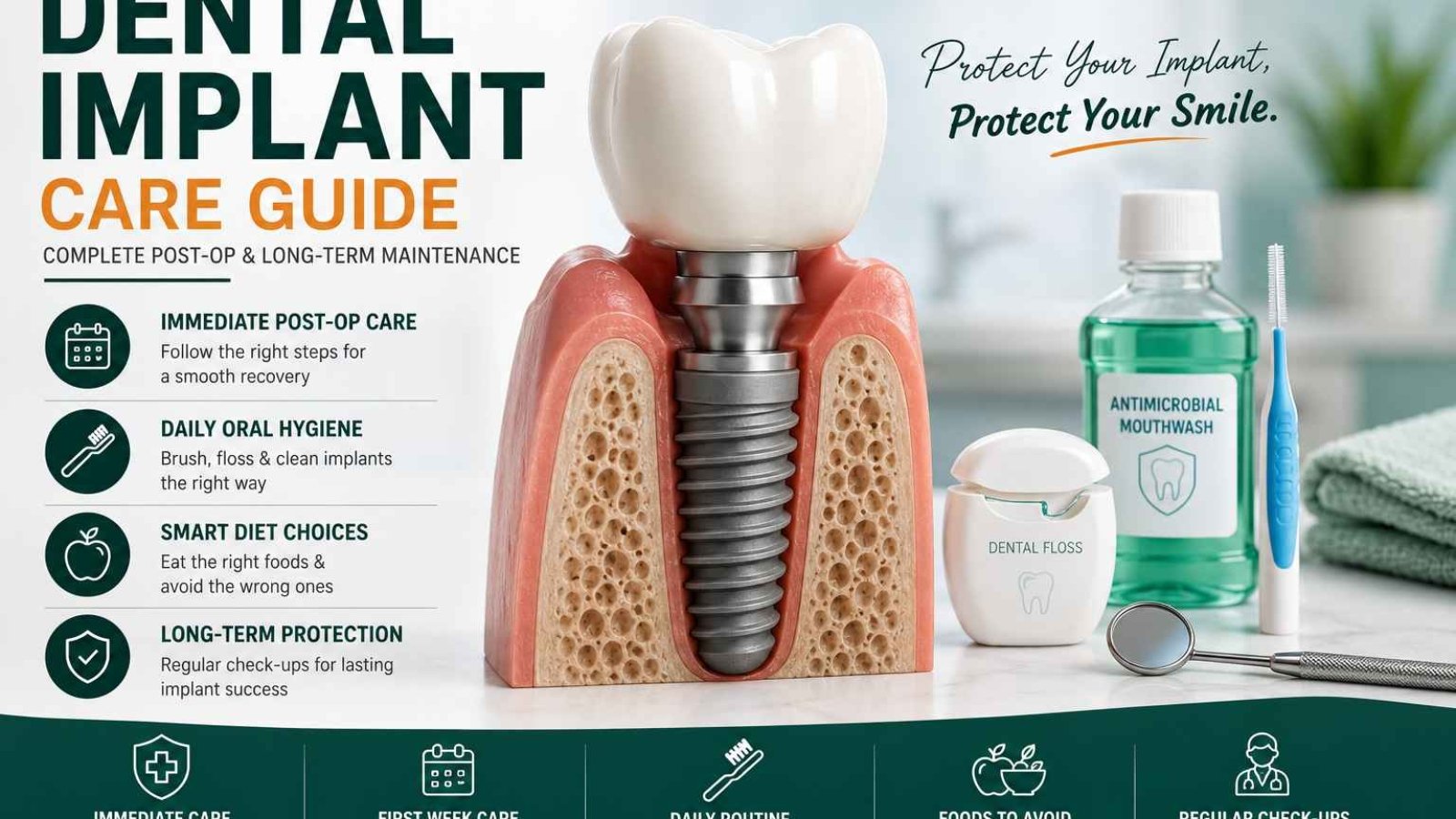
Dental Implant Care Guide
An exhaustive roadmap for protecting your surgical investment, featuring immediate post-op protocols, long-term oral hygiene systems, and preventative complication analysis.
⏱️ 14-16 Min Read
✓ Clinical Board Approved
What Are Dental Implants & Why Care Matters
Dental implants are the gold standard for tooth replacement. Unlike superficial bridges or removable dentures, a dental implant utilizes a biocompatible titanium post surgically anchored into your jawbone. Over time, a structural fusion process known as **osseointegration** locks the bone directly to the implant surface, providing a root-like base for a porcelain crown. While dental implants cannot get cavities, their long-term survival relies entirely on the surrounding gum and bone tissue. Without strict care, bacteria can accumulate, leading to peri-implantitis (gum disease around the implant) and eventual bone loss. This comprehensive dental implant care guide outlines exactly how to preserve your smile at every stage of healing and lifestyle wear.
Table of Contents
→ 2. First Week After Implant Surgery
→ 3. Daily Implant Care Routine & Techniques
→ 4. Dietary Parameters & Chemical Restrictions
→ 5. Essential Care Products & Equipment Recommendations
→ 6. Long-Term Implant Maintenance Systems
→ 7. Common Implant Problems & Solutions
→ 8. How Long Do Implants Last? Lifespan Analysis
→ 9. Frequently Asked Questions
1. Immediate Post-Surgery Care (First 24-48 Hours)
The initial 48 hours following dental implant placement are crucial for stabilization and blood clot formation. Your body is initiating a deep healing response, and minimizing site irritation is key to preventing early complications.
Pain Management
Take prescribed or over-the-counter anti-inflammatory medications (such as Ibuprofen) before the surgical anesthesia wears off completely. Consistent dosing during the first 48 hours regulates systemic swelling and nerve discomfort effectively.
Swelling & Bleeding Control
Apply cold compress ice packs to the side of your face continuously using a 20-minutes-on, 20-minutes-off rotation. Keep steady pressure on the surgical site by biting down gently on damp sterile gauze packs for the first hour post-op.
Rest & Activity Restrictions
Avoid intense aerobic exercise, heavy lifting, or running for at least 48 hours. Elevate your head with an extra pillow when sleeping to lower local blood pressure at the surgical site, preventing throbbing sensations and bleeding.
2. First Week After Implant Surgery
As you enter days 3 through 7, your soft tissues begin adapting to the new implant hardware. While acute pain should start to fade, maintaining clean tissue surfaces without disrupting the surgical stitches remains essential.
- Oral Hygiene During Healing: Do not brush directly over the surgical wound for the first 4 days to avoid fraying the stitches or opening the incision line. Brush your remaining teeth normally. On day 3, start warm salt water rinses (1/2 teaspoon of salt in a glass of warm water) 4–5 times a day after meals to flush away food debris.
- What to Eat & What to Avoid: Stick to an ultra-soft or liquid-heavy diet. Nutritious choices include protein shakes, lukewarm pureed soups, Greek yogurt, mashed avocados, scrambled eggs, and smoothies. Avoid crunchy chips, crusty bread, or seeds that can get trapped under gum flaps.
- Signs of Infection to Watch: Monitor the site daily. It is normal to see mild oozing or swelling peak on day 3, but you should contact your dentist immediately if you experience a foul, pus-like taste, sudden severe throbbing pain that medication cannot control, or a fever above 101°F (38.3°C).
3. Daily Implant Care Routine & Techniques
Once your gums have completely healed and your permanent porcelain crown is attached, your maintenance focus shifts to long-term care. Plaque biofilm can accumulate on implant crowns just like natural teeth, requiring a dedicated daily hygiene routine:
Advanced Brushing Techniques
Brush at least twice a day using a soft-bristled manual toothbrush or an electric sonic toothbrush. Angle the bristles at a 45-degree angle toward the gumline where the crown meets the tissue. Roll the bristles gently into the crevice to sweep out hidden bacteria, cleaning all interior, exterior, and biting surfaces thoroughly.
Flossing Around Implants
Flossing around an implant is slightly different than a regular tooth. Wrap specialized implant floss completely around the neck of the crown, cross the strands in front, and slide it up and down in a gentle shoe-shine motion. This cleans the entire circular base without pushing too hard against the delicate gum seal below.
4. Dietary Parameters & Chemical Restrictions
Your diet directly affects both the initial healing of your implants and the long-term structural integrity of the ceramic crown material. Adjust your habits based on these key guidelines:
- Hard & Sticky Foods: Do not chew hard ice cubes, unpopped popcorn kernels, hard candies, or tough nuts. These can crack porcelain surfaces and stress the underlying bone structure. Limit sticky caramels or gummy candies, which pull on implant structures and trap sugars in hard-to-reach areas.
- Hot Foods During Healing: Avoid piping hot coffee, boiling teas, or spicy dishes for the first 5 days post-surgery. High temperatures cause local blood vessels to expand, which can disrupt healing clots and cause the surgical wound to bleed again.
- Alcohol & Smoking Impact: Avoid alcoholic drinks for at least 72 hours post-op, as alcohol thins the blood and interferes with pain medications. Most importantly, avoid smoking or vaping for at least 6 to 8 weeks. Nicotine restricts capillary blood flow to the gums, significantly slowing down bone integration and increasing the risk of early implant failure.
5. Essential Care Products & Equipment Recommendations
Standard grocery-store oral care items can sometimes be too abrasive for dental implant materials. Using the right specialized tools keeps your restoration clean without scratching its smooth surfaces:
| Product Classification | Recommended Clinical Attributes | Key Health Benefit Provided |
|---|---|---|
| Specialized Implant Floss | Thick, spongy, woven thread designs with stiff plastic threader tips. | Sweeps away food particles around deep margins without tearing. |
| Non-Abrasive Toothpaste | Low RDA (Relative Dentin Abrasivity) value gels; **free of charcoal or baking soda**. | Cleans thoroughly without scratching the smooth porcelain glaze or exposed metal parts. |
| Antimicrobial Mouthwash | Alcohol-free formulas containing Zinc, Essential Oils, or Chlorhexidine. | Controls harmful bacteria populations without drying out or irritating healing oral tissues. |
| Interdental Brushes | Flexible, plastic-coated wire heads with soft, small nylon bristles. | Easily cleans wide gaps underneath dental implant bridges without scratching titanium parts. |
🔍 Understanding Your Oral Health: Want to see how dentists check your implant’s bone stability using ultra-low dose direct imaging tech? Explore our full guide explaining how dental x-ray sensors work to learn about high-definition bone visualization.
6. Long-Term Implant Maintenance Systems
Excellent home care is a fantastic start, but maintaining your dental implants long-term requires partnership with your dental professional. Overlooking routine office appointments can allow hidden deep-tissue issues to go unnoticed:
- Regular Dental Checkups: Schedule professional exams at least every 6 months. Your dentist will evaluate the clinical stability of the implant connection, assess neighboring teeth, and ensure your bite forces are balanced across all structures evenly.
- Professional Cleanings: Dental hygienists use specialized ultrasonic tips or hand scalers made from carbon fiber or rigid plastic. These tools clean under the gumline without scratching or scraping the titanium implant components.
- Yearly Monitoring: Your dentist will take yearly low-dose digital x-rays to track bone levels around the implant threads, ensuring the osseointegration bond remains strong and healthy.
7. Common Implant Problems & Solutions
Recognizing early signs of implant irritation allows your dental team to intervene and correct the issue before it leads to serious complications. Watch for these common warning signs:
Loose Implants
If you notice a slight movement or wiggle when chewing, contact your doctor right away. Often, the internal titanium abutment screw holding the crown has simply loosened over time. Your dentist can easily retighten it to the proper torque settings.
Gum Recession Around Crowns
Gums can pull back due to heavy biting forces or overly aggressive brushing. If you notice exposed dark metal margins, your hygienist can adjust your brushing technique or recommend soft-tissue therapy to protect the area.
Bone Loss Warning Signs
Persistent bleeding, deep pocket swelling, or chronic dull pain can indicate early peri-implantitis bone loss. Dentists treat this with deep antibiotic flushes, localized laser therapies, or modern bone grafting techniques.
8. How Long Do Implants Last? Lifespan Analysis
With proper care and maintenance, the titanium base of a dental implant can last **25 years to a lifetime**. The superficial porcelain crown attached to the top handles daily chewing wear and tear, and typically needs replacement or maintenance every 10 to 15 years.
Your implant’s actual lifespan depends on key factors like your overall systemic health (such as controlled blood sugar levels), avoiding grinding habits (bruxism) by wearing an evening nightguard, and consistency with your home hygiene routine. Protecting the surrounding bone ensures your implants remain stable for decades.
9. Frequently Asked Questions
Can I use a standard water flosser tool around my dental implants?
Yes, water flossers are excellent tools for cleaning implants. Use them on a low-to-medium pressure setting and point the tip at a 90-degree angle to flush out food particles from wide spaces under bridges or crowns safely.
Why is smoking considered dangerous after dental implant surgery?
Nicotine narrows the small blood vessels in your gums, reducing the oxygen and nutrients delivered to the healing bone. This significantly slows down the osseointegration process, increasing the chance of early implant failure.
What should I do if my implant crown breaks or cracks?
Avoid chewing on that side of your mouth and schedule an appointment with your dentist. The titanium root post is likely safe beneath the gum; your dentist can easily unscrew the broken crown and replace it with a fresh porcelain restoration.
Find High-Quality Dental Implant Care Supplies
Protecting your dental implants requires the right specialized hygiene tools. From ultra-soft toothbrushes to gentle, plastic-coated interdental brushes and premium oral care kits, SwatDental provides the high-quality supplies your practice or home care routine needs.
Add a Comment