 Cart is empty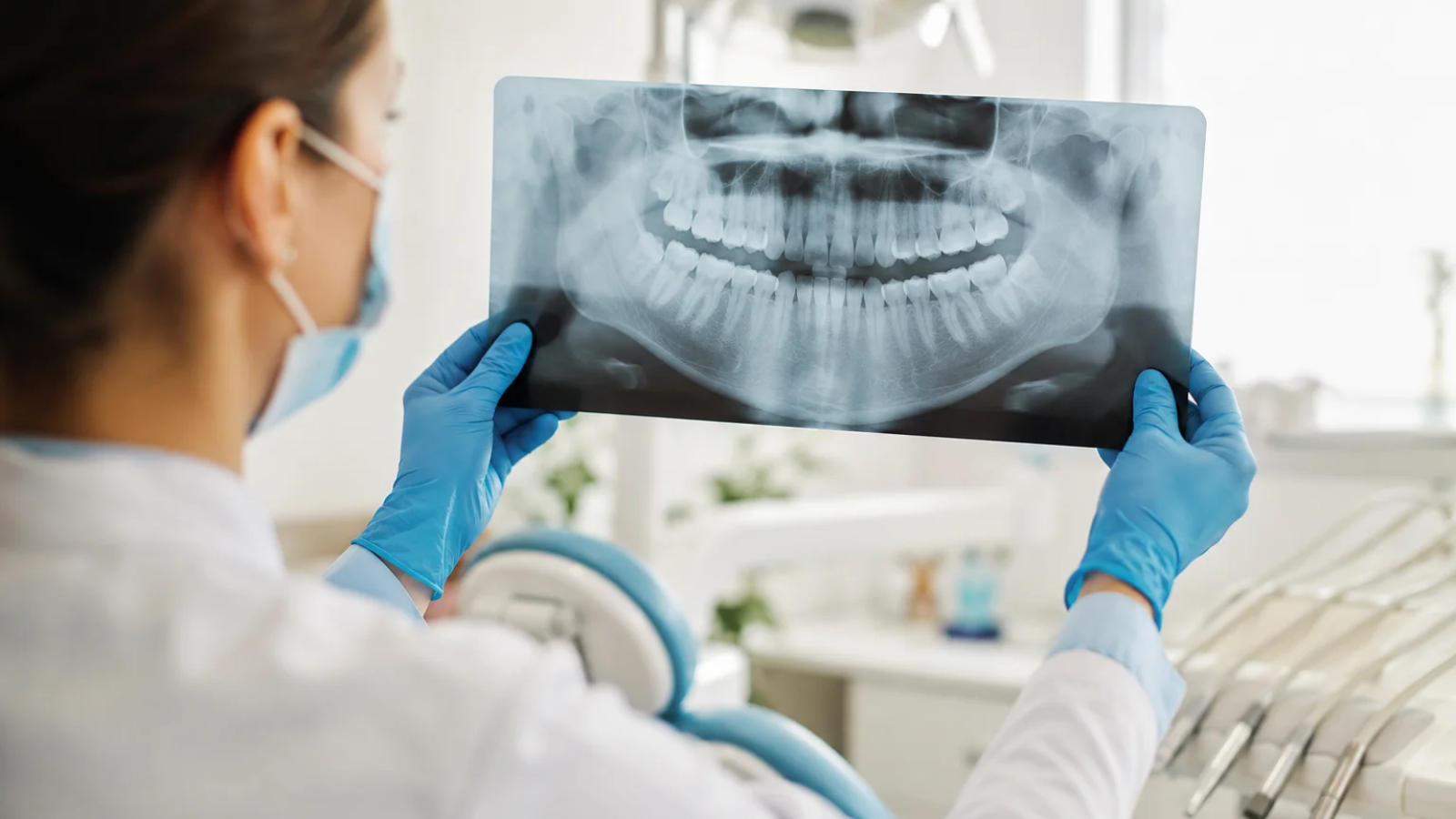
How Often Should Dental X-Rays Be Taken?
A technical review outlining official diagnostic intervals, risk-based classification pathways, and how modern digital sensor systems alter clinical exposure schedules.
⏱️ 9-11 Min Read
✓ ADA & FDA Framework Compliant
⚡ Quick Diagnostic Interval Guide
When evaluating **How Often Should Dental X-Rays Be Taken?**, there is no generic, one-size-fits-all calendar baseline. According to official American Dental Association (ADA) and FDA guidelines, radiographic frequency must be personalized based on a patient’s **age, clinical history, and active risk for oral disease**. For healthy adult patients with zero active caries history and low risk levels, bitewing examinations are typically recommended every **24 to 36 months**. However, for patients classified as high-risk—such as individuals suffering from active decay, structural bone loss, dry mouth syndromes, or hidden secondary enamel lesions—intervals are compressed to every **6 to 18 months** to catch underlying pathology before extensive damage occurs.
Table of Contents
→ 2. Frequency Recommendations by Age (Child vs. Adult)
→ 3. Clinical Indicators That Compress X-Ray Timelines
→ 4. How Modern Digital Sensors Impact Frequency Selection
→ 5. ADA & FDA Radiographic Selection Master Matrix
→ 6. Frequently Asked Questions
1. The Core Rule: Custom Risk Assessment vs. Calendar Defaults
In the past, patients often assumed that sitting down for dental images was a mandatory, automated addition to every single six-month cleaning appointment. However, modern evidence-based dentistry shifts the focus entirely. When establishing **How Often Should Dental X-Rays Be Taken?**, clinical regulatory bodies state that every single exposure must be explicitly justified by an updated physical evaluation.
Doctors analyze a patient’s historical oral patterns, structural anatomy stability, systemic medical health histories, and lifestyle habits before choosing an exposure plan. This means a patient with a pristine track record of zero structural enamel wear will experience vastly different exposure paths compared to someone managing shifting localized parameters.
2. Frequency Recommendations by Age Groups
Age groups alter the internal calcification structures of teeth and the overall movement speeds of hidden oral conditions, directly impacting how often a clinician needs to review diagnostic images.
Pediatric & Adolescent Stages
Children feature dynamic primary and mixed tooth setups. Because their jaw structures are actively growing and thin primary enamel layer walls can allow decay to progress quickly into nerve chambers, high-risk pediatric cases require bitewing sweeps every **6 to 12 months**. For low-risk children, the interval expands to **12 to 24 months**.
Fully Developed Adults
Once dental arches mature fully, structurally stable adults with sound enamel walls can easily extend their intervals safely. Low-risk individuals require routine bitewing checks only every **24 to 36 months**. For adults facing active recurring decay or shifting underlying restorations, clinical safety parameters direct imaging cycles every **6 to 18 months**.
New Patient Initial baselines
When an unfamiliar patient registers at a practice without access to recent historical records, a baseline scan is required to map out root paths, evaluate hidden dense structures, and identify bone levels. This typically involves a comprehensive **Full-Mouth Series (FMX)** or a panoramic sweep accompanied by localized bitewing views.
3. Clinical Indicators That Compress X-Ray Timelines
Several clinical and systemic conditions immediately push a patient into the high-risk category, requiring shorter intervals when determining **How Often Should Dental X-Rays Be Taken?**:
Active Periodontal Pathology
When a patient shows signs of receding gum structures or deep periodontal pocketing depths, regular physical checks are insufficient. The clinical team must routinely track structural crestal bone level heights beneath the tissue line to halt advanced bone loss.
Extensive Restorative History
Clinics managing complex smile reconstructions, deep crowns, multi-surface fillings, or implant fixtures must monitor margins closely. Hidden secondary decay forming right beneath old filling margins is impossible to view with eyes alone.
Xerostomia (Dry Mouth Syndromes)
Saliva serves as the mouth’s natural defense mechanism, neutralizing acids and continuously washing away sugars. When medications or medical issues dry out these fluid paths, decay can accelerate rapidly, necessitating tighter imaging cycles.
Active Orthodontic Mechanics
Applying structural force layers to move teeth requires careful tracking. Clinicians utilize focused imaging sweeps to watch changing root alignment profiles, evaluate underlying bone density states, and protect root tips from resorption risks.
4. How Modern Digital Sensors Impact Frequency Selection
One of the biggest factors that makes regular imaging safer today is the widespread shift away from legacy analog film packets. The core issue with old-school setups wasn’t just the operational lag; it was the high radiation dosing required to activate the film grain layers.
Modern dental clinics use highly responsive solid-state sensors. These digital tools feature highly advanced silicon design matrices that catch and convert photons with incredible efficiency, allowing doctors to capture high-definition anatomical details while using **up to 90% less radiation** compared to vintage film paths.
Because direct digital imaging cuts patient exposure down to microscopic millisievert ranges, it drastically lowers the safety hurdle for necessary diagnostic tracking. If a clinic needs to map a complex recovery path or check structural stability across shorter cycles, they can do so safely without pushing patients past acceptable background radiation safety limits.
5. ADA & FDA Radiographic Selection Master Matrix
This formal guideline matrix maps out standard, evidence-based recommendations for **How Often Should Dental X-Rays Be Taken?** across common patient risk profiles:
| Patient Category & Age Group | Clinical Status Profile | Recommended X-Ray Modality | Optimal Clinical Dosing Interval |
|---|---|---|---|
| Child (Primary/Mixed Dentition) | Active decay history or high risk indicators | Posterior Bitewings | Every 6 to 12 Months |
| Child (Primary/Mixed Dentition) | Zero active decay history; low risk indicators | Posterior Bitewings | Every 12 to 24 Months |
| Adolescent (Transitioning Dentition) | Active decay history or high risk indicators | Posterior Bitewings | Every 6 to 18 Months |
| Adolescent (Transitioning Dentition) | Zero active decay history; low risk indicators | Posterior Bitewings | Every 18 to 36 Months |
| Adult (Fully Developed Dentition) | Active decay history or high risk indicators | Posterior Bitewings | Every 6 to 18 Months |
| Adult (Fully Developed Dentition) | Zero active decay history; low risk indicators | Posterior Bitewings | Every 24 to 36 Months |
| New Patient (All Age Categories) | Baseline intake; historical data missing | FMX (Full Mouth Series) or Panoramic + Bitewings | Administered immediately during initial comprehensive exam |
🔬 Deepen Your Technical Foundation: To understand the exact semiconductor physics that make these low-radiation intervals safe, explore our comprehensive breakdown detailing exactly how dental x-ray sensors work to learn about cesium iodide scintillators and high-bit pixel mapping.
6. Frequently Asked Questions
Should pregnant patients completely avoid routine dental X-rays?
No, elective routine checks can be deferred until after delivery, but necessary diagnostic images to treat active tooth infections or emergencies are completely safe during pregnancy. Modern digital sensors combined with proper leaded aprons and thyroid shields keep scatter radiation away from the abdomen entirely.
How often should a full-mouth panoramic or CBCT image be updated?
Panoramic images are typically updated every 3 to 5 years depending on wisdom teeth development or TMJ monitoring needs. 3D CBCT scans are never scheduled on an automated calendar; they are ordered only when complex surgical or implant needs arise.
What are the risks if I choose to decline all recommended dental X-rays?
Declining images leaves hidden interproximal decay, jawbone loss, deep cysts, and root infections completely invisible. By the time these issues cause physical pain, the structural damage is often severe, requiring root canals or extractions that could have been avoided.
Equip Your Clinic for High-Efficiency Diagnostics
Ensure your practice delivers ultra-low dose diagnostic safety. Discover the industry’s finest digital CMOS sensors, phosphor storage plate systems, and nimble handheld generators at SwatDental.
Add a Comment