RVG Sensor vs PSP Scanner

RVG Sensor vs PSP Scanner: Complete Clinical Comparison Guide


RVG Sensor vs PSP Scanner: Complete Clinical Comparison Guide


DIAGNOSTIC TECHNOLOGY INSIGHTS

RVG Sensor vs PSP Scanner

An in-depth structural comparison analyzing image latency, spatial resolution, wear-and-tear durability, and long-term ROI parameters for modern practices.

📅 Updated: June 2026
⏱️ 12-14 Min Read
✓ Data-Driven Practice Insights

⚡ The Executive Summary

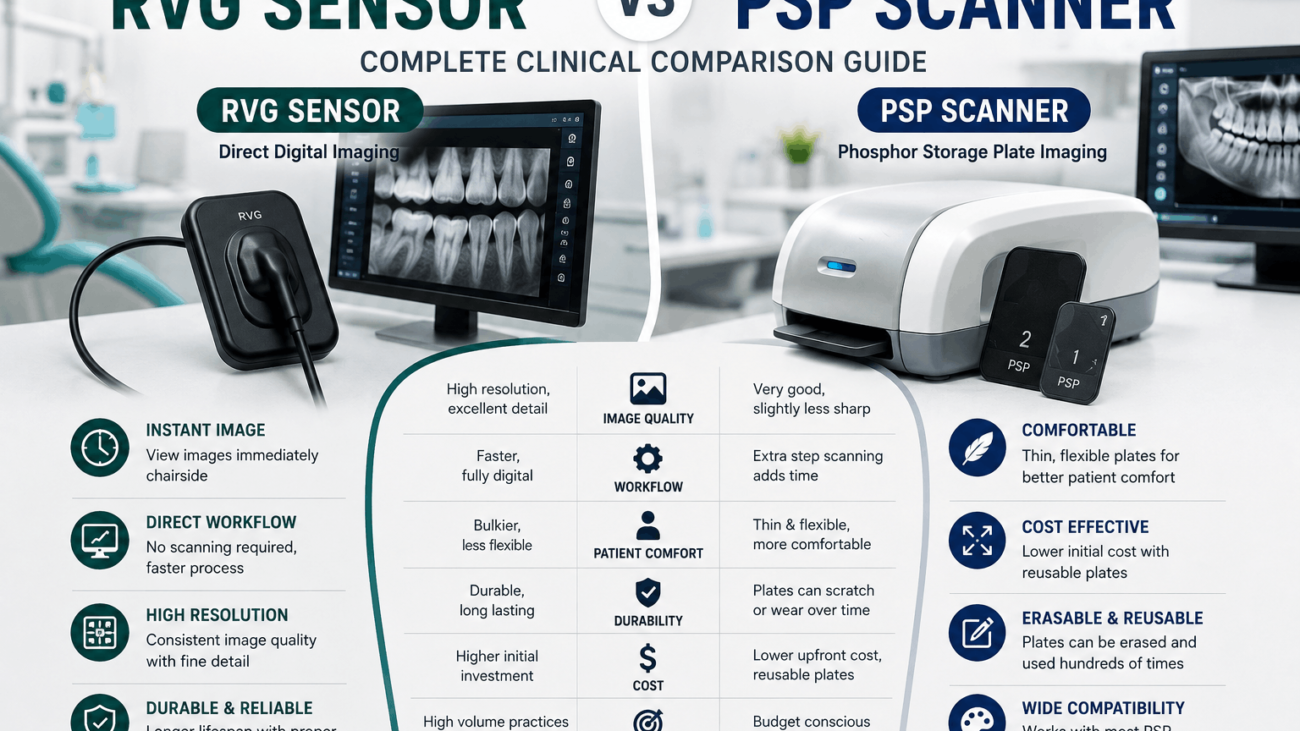
When evaluating an **RVG Sensor vs PSP Scanner**, the choice boils down to a balance between **speed** and **flexibility**. **RVG (Radiovisiography) sensors** use direct digital chips (CMOS) that deliver crystal-clear images to your monitor instantly (under 2 seconds), making them unbeatable for fast-paced procedures like root canals or implant placements. However, they are rigid and thick. **PSP (Phosphor Storage Plate) scanners** use thin, cordless, flexible plates that handle just like traditional film, offering superior patient comfort—especially for children or patients with strong gag reflexes. They require a manual step where plates are fed into a central laser scanner, but a single scanner can support an entire multi-surgery practice.

1. Deep Dive: RVG Direct Digital Technology

**RVG (Radiovisiography)** sensors are the standard choice for direct digital intraoral radiography. These devices house a solid-state sensor chip—typically built on **CMOS (Complementary Metal-Oxide-Semiconductor)** architecture—inside a sealed, liquid-proof plastic shell.

The core advantage of an RVG setup is its **real-time image delivery**. Because the sensor remains hardwired via a durable USB cable directly to the computer, captured images display on your chairside monitor in under two seconds. This completely eliminates wait times, allowing dental teams to view sharp structures instantly.

Furthermore, top-tier RVG sensors deliver incredibly high spatial resolution, frequently exceeding **20 to 25 line pairs per millimeter (lp/mm)**. This level of detail makes them essential for high-precision diagnostic work, such as verifying tiny root canal apex lines or monitoring early bone integration around implant threads.

2. Deep Dive: PSP Indirect Imaging Systems

**PSP (Phosphor Storage Plate)** systems offer an indirect path to digital dental imaging. Instead of a thick, wired silicon block, a PSP setup utilizes thin, flexible plates coated with a layer of photostimulable barium fluorohalide phosphors.

When the x-ray hits the plate, the phosphor crystals trap the radiation energy, creating a latent “hidden” image on its surface. The assistant then takes the cordless plate out of its protective hygiene sleeve and places it into a mechanical laser scanner. The laser reads the trapped energy data, converts it into a digital image file for your screen, and automatically erases the plate with white light so it is ready to be sterilized and used again.

While this scanning loop adds a minor delay (typically 10 to 30 seconds depending on the scanner model), the cordless plates look, flex, and handle just like traditional analog dental film. This design makes them highly versatile and remarkably comfortable for patients.

3. Side-by-Side Architectural Evaluation Matrix

To help you weigh the structural and performance trade-offs of an **RVG Sensor vs PSP Scanner**, this matrix compares their core specifications side by side:

Performance Metric Focus Direct RVG Sensor Technology Indirect PSP Scanner Systems
Image Processing Speed **Instantaneous** (< 2 seconds); direct data link. **Delayed** (10–30 seconds); requires laser scanning.
Physical Comfort & Flexibility Rigid, thick plastic shell; attached to a USB cord. **Thin, flexible, and completely cordless** plates.
Maximum Resolution (lp/mm) Higher peak resolution (**20 to 25+ lp/mm**). Excellent diagnostic resolution (**15 to 20 lp/mm**).
Sizing Variations Available Limited (typically Size 0, Size 1, and Size 2). Comprehensive (**Size 0, 1, 2, 3, and 4 occlusal**).
Long-Term Durability Risks Cable stress breaks or sensor drops can ruin the unit. Plates scratch over time and need periodic replacement.
Multi-Operatory Sharing Requires moving the sensor or buying units for each room. **One central scanner** easily processes plates for multiple rooms.

4. Patient Ergonomics & Clinical Workflow Impact

Choosing between these technologies heavily influences both your daily clinic pacing and your patients’ overall comfort during treatment:

  • The Patient Comfort Factor: Because RVG sensors are thick and unyielding, positioning them in patients with small arches, shallow palates, or large bony exostoses (torus mandibularis) can trigger severe gag reflexes or cause mild tissue bruising. On the other hand, cordless PSP plates bend slightly to match the contour of the jaw, ensuring an easy, pain-free experience for pediatric or sensitive patients.
  • The Real-Time Workflow Advantage: For procedures like endodontic root treatments, checking an intermediate file instantly with an RVG sensor keeps the workspace efficient. The doctor can confirm instrument depths with the file still in place, without breaking concentration. Using a PSP system here requires taking the plate out, walking it over to a scanner, waiting for processing, and returning to the chair—which adds up over a busy day.

🔬 Go Deeper Into Diagnostic Physics: Want to see exactly how these low-dose systems turn minor photon signals into crisp images? Read our comprehensive technical guide explaining how dental x-ray sensors work to learn about internal scintillator screens and direct conversion engineering.

5. Financial ROI & Buyer’s Decision Framework

To optimize your investment, evaluate the equipment through the lens of your practice’s specific setup and long-term financial budget:

When to Invest in RVG Sensors:

Choose an RVG configuration if you operate a fast-paced single-chair setup, handle complex endodontic treatments daily, or want to eliminate manual scanning steps entirely. It requires a higher upfront cost per room, but saves significant staff time over its lifespan.

When to Invest in a PSP Scanner Unit:

Choose a PSP system if you manage a larger multi-operatory clinic where buying separate sensors for every room is budget-prohibitive. A single PSP scanner can effortlessly support up to 4 or 5 operatories via network sharing. It is also the ideal choice for family practices that require true Size 4 occlusal views or need maximum comfort for young children.

6. Frequently Asked Questions

What happens if a PSP plate gets scratched during handling?

Scratches create small visual lines on future images, which can mimic fractures or decay. Luckily, individual PSP plates are highly affordable and easy to replace. This contrasts with RVG sensors, where a severe cable break or dropped chip can require replacing the entire expensive system.

Can I use a combination of both RVG and PSP technologies in the same clinic?

Yes, many modern clinics utilize a hybrid model. They place fast RVG sensors in dedicated surgical or endodontic rooms for real-time tracking, while utilizing a central PSP scanner to process routine preventive bitewings and pediatric exams comfortably.

Which option exposes patients to less diagnostic radiation?

Both systems are exceptionally safe and offer massive radiation reductions (up to 80-90%) compared to old film methods. RVG sensors are slightly more sensitive to incoming x-ray photons, meaning they can operate with minorly shorter pulse times than phosphor plates.

Upgrade to the Perfect Digital Imaging System

Ready to optimize your practice? Whether you want the blistering fast speed of premium digital RVG sensors or the versatile multi-room sharing of an ultra-high-resolution PSP scanner, SwatDental has you covered.
ARTICLE EXECUTIVE SUMMARY

This clinical guide systematically evaluates the architectural differences between RVG sensors and PSP scanners, assisting practice managers in optimizing diagnostic speed, cost management, and patient care workflows.

EQUIPMENT WARRANTY DISCLAIMER

Device specifications, processing response loops, and resolution line pair figures can vary based on manufacturer engineering changes. Always review direct brand equipment specifications prior to final installation.

© 2026 SwatDental. All rights reserved. | International Dental Technology Standards | Practice Platform Assets


Common Dental Imaging Technologies

Common Dental Imaging Technologies: A Complete Clinical Guide


Common Dental Imaging Technologies: A Complete Clinical Guide


CLINICAL EQUIPMENT REVIEW

Common Dental Imaging Technologies

An engineering breakdown of modern diagnostic systems, tracking structural workflows from direct solid-state intraoral receptors up to 3D cone beam volumetric scans.

📅 Published: June 2026
⏱️ 10-12 Min Read
✓ Comprehensive Clinical Hardware Guide

⚡ Summary of Modern Diagnostic Hardware

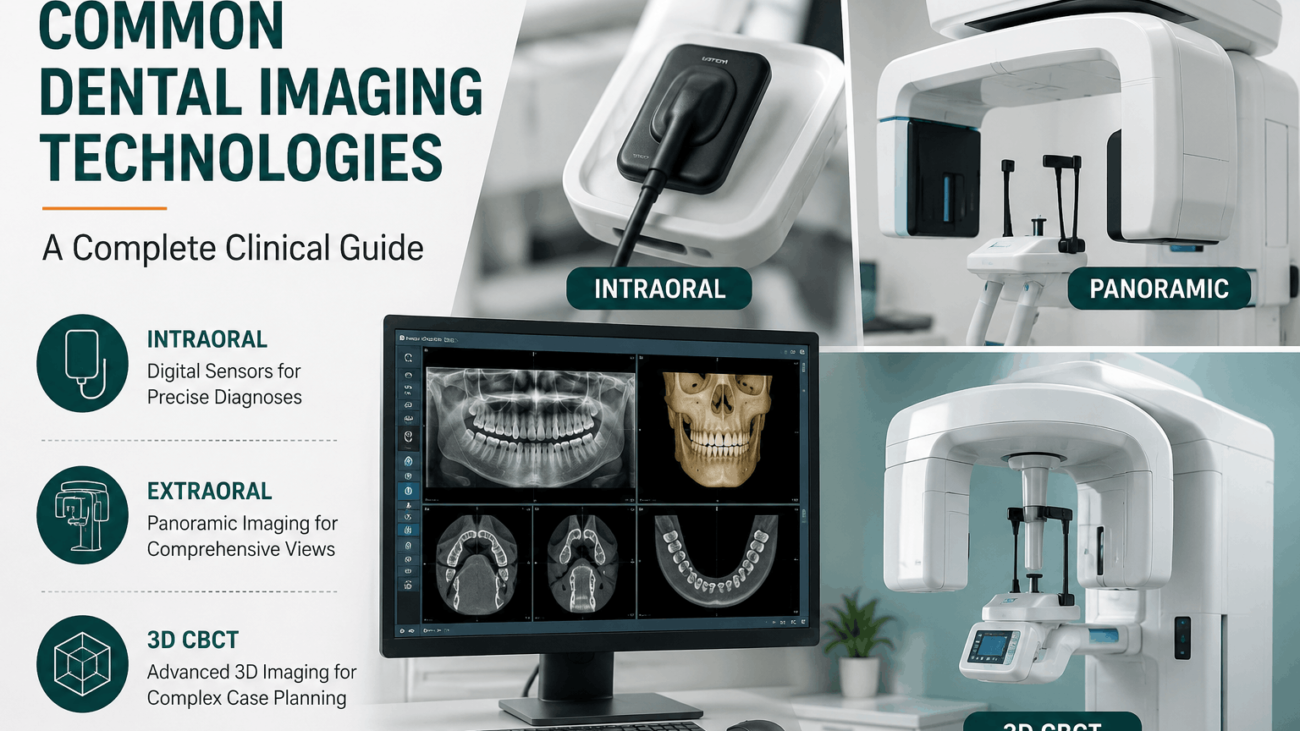
Modern dental practices rely on an integrated suite of **Common Dental Imaging Technologies** to identify pathologies hidden deep within soft tissues and bone matrices. These systems are broadly split into **intraoral technology**—such as high-efficiency, solid-state **CMOS digital sensors** and flexible **Phosphor Storage Plates (PSP)** placed inside the mouth for precise caries detection—and **extraoral technology**. Extraoral solutions feature **Digital Panoramic units** that map out the entire dental arch in a single sweep, alongside **Cone Beam Computed Tomography (CBCT)**, which renders true 3D volumetric images essential for complex root canal therapies, bone grafting procedures, and precision dental implant placements.

1. Intraoral Imaging Receptors (CMOS vs. PSP Plates)

Intraoral modalities represent the most common foundational tier within the landscape of **Common Dental Imaging Technologies**. These systems involve placing a highly responsive receptor directly inside the patient’s oral cavity to capture localized structural views, such as interproximal bitewings, periapical root maps, or wide occlusal structures.

Solid-State Digital Sensors (CMOS)

Direct digital sensors built on **Complementary Metal-Oxide-Semiconductor (CMOS)** architecture stand as the gold standard for clinical speed. These rigid receptors are connected via a durable USB cord or a wireless transmitter block directly to your chairside computer monitor. The instant an exposure finishes, the image renders on-screen in less than two seconds, allowing the dental team to diagnose issues immediately without stepping away from the patient’s side.

Phosphor Storage Plates (PSP)

Phosphor storage systems utilize cordless, highly flexible plates that mirror the comfortable shape of traditional dental film. When an exposure occurs, the phosphor surface stores the raw energy data within its internal lattice. The plate is then placed inside a mechanical laser scanner that processes the digital file onto your screen before instantly clearing the plate for immediate sterilization and re-use.

2. 2D Extraoral Diagnostic Hardware

When a clinician needs a broader view that stretches past individual tooth roots, they shift toward extraoral imaging platforms. These systems keep the imaging receptors completely outside the patient’s mouth, utilizing synchronized mechanical sweeps to capture sweeping anatomical maps.

**Digital Panoramic Radiography** machines are a vital asset within this category. The x-ray source arm revolves smoothly around the patient’s head, generating a single, flattened 2D panoramic map that displays both jaw arches, the temporomandibular joints (TMJ), and the maxillary sinus cavities simultaneously. For specialized orthodontic practices, **Cephalometric attachments** are added to these systems to capture precise lateral skull bone proportions, which are critical for charting shifting orthodontic movements accurately.

3. 3D Cone Beam Computed Tomography (CBCT)

While 2D panoramic sweeps provide fantastic foundational summaries, flat images can occasionally camouflage deep structural overlaps. **Cone Beam Computed Tomography (CBCT)** resolves this limitation by providing true 3D volumetric rendering to modern dental operatories.

Unlike heavy medical CT scanners that rely on thin slice paths, a dental CBCT machine emits a highly focused, cone-shaped radiation beam. As the arm rotates around the patient, it captures hundreds of distinct high-resolution data slices in a single pass. The processing software compiles these data blocks into an interactive 3D model, allowing oral surgeons and endodontists to rotate bone maps, inspect hidden root canal branches, and plan dental implant paths with microscopic accuracy.

4. Next-Gen Auxiliary Imaging Systems

To round out a truly modern diagnostic workflow, clinics frequently add non-radiographic auxiliary technologies to their setups. **Intraoral Cameras** are small, pen-sized devices equipped with bright LED rings that take high-magnification, full-color photos of tooth surfaces. These systems serve as powerful patient education tools, allowing individuals to see structural fractures or margin leaks directly on a chairside screen.

Similarly, advanced **Digital Transillumination** devices pass intense, focused near-infrared light paths straight through tooth structures. Because dense, healthy enamel guides light differently than active decay networks, this technology allows clinicians to spot early interproximal caries without exposing the patient to any diagnostic radiation.

5. Comprehensive Imaging Technology Comparison Matrix

This analytical reference matrix compares the primary systems within modern dental imaging, helping you evaluate performance and clinical scope:

Imaging Modality Technology Image Format Core Diagnostic Target Focus Primary Workflow Advantage
CMOS Digital Sensors High-Bit 2D Digital Map Interproximal decay networks, fine root details, bone levels **Instant chairside rendering** in under 2 seconds; zero processing lag.
Phosphor Storage Plates (PSP) Flexible 2D Digital Scan Caries detection, multi-size pediatric and adult views Cordless, thin plate design provides **excellent patient comfort**.
Digital Panoramic Units Wide 2D Comprehensive Map Full dental arch alignment, TMJ paths, sinus boundaries Captures the entire oral complex in **one single automated sweep**.
3D CBCT Systems 3D Volumetric Model Implant path planning, bone volume, root canal paths Delivers comprehensive **three-dimensional architectural precision**.
Intraoral Cameras Full-Color High-Mag Photo Surface fractures, soft tissue marks, old crown margins **Exceptional patient education tool** for visual verification.

🔬 Go Deeper Into Sensor Engineering: To truly understand the internal silicon structures and scintillator physics that power these high-speed intraoral systems, explore our detailed guide explaining exactly how dental x-ray sensors work to master direct-conversion engineering and pixel architectures.

6. Frequently Asked Questions

What is the practical difference between choosing a CMOS sensor over a PSP system?

CMOS sensors provide direct data processing straight to your screen in under two seconds, optimizing fast-paced operations. PSP systems require a manual scanning step, but they offer greater plate flexibility, which helps when accommodating patients with shallow palates or sensitive anatomy.

Why are 3D CBCT scans preferred over 2D periapical options for dental implant placements?

Standard 2D images cannot show the true physical thickness or width of the jawbone, which introduces risk when plotting implant posts. A 3D CBCT scan provides cross-sectional views that allow doctors to precisely evaluate bone volume and avoid sensitive nerve paths.

Do non-radiographic transillumination devices entirely replace standard x-rays?

No. While transillumination tools excel at spotting early interproximal enamel fractures without radiation, they cannot penetrate deep bone layers or trace underlying root infections, meaning standard digital sensors remain a clinical necessity.

Modernize Your Clinic With Elite Imaging Systems

Equip your practice with state-of-the-art diagnostic power. Discover top-tier digital CMOS sensors, smart PSP laser scanners, and advanced 3D CBCT configurations at SwatDental.

ARTICLE EXECUTIVE SUMMARY

This comparative clinical reference catalogs the most common dental imaging technologies, explaining how contemporary practices balance direct intraoral chip workflows with high-tier volumetric 3D diagnostic platforms.

TECHNICAL REGULATORY DISCLAIMER

The diagnostic equipment specifications and guidelines detailed here are intended strictly for educational and general information reference. They do not replace hands-on manufacturing protocols, device manuals, or expert medical directives.

© 2026 SwatDental. All rights reserved. | International Dental Engineering Standards | Secure CMS Delivery


Are Dental X-Rays Safe

Are Dental X-Rays Safe? Clinical Radiation Facts & Safety


Are Dental X-Rays Safe? Clinical Radiation Facts & Safety


PATIENT EDUCATION & SAFETY

Are Dental X-Rays Safe?

Demystifying diagnostic radiation exposure using concrete scientific benchmarks, millisievert data, and the protective engineering inside modern imaging hardware.

📅 Published: June 2026
⏱️ 8-10 Min Read
✓ Verified by Radiology Standards

⚡ The Definitive Clinical Answer

Yes, **modern dental X-rays are exceptionally safe**. When asking **Are Dental X-Rays Safe?**, it helps to look at the numbers: a standard set of digital intraoral bitewings exposes a patient to roughly **0.005 millisieverts (mSv) of radiation**. This tiny amount is equivalent to what you naturally absorb from the sun and soil during just **less than one single day of normal life on Earth**. Thanks to advanced solid-state **CMOS digital sensors**, lead-lined thyroid collars, and tightly focused radiation beams, the medical risk is incredibly low, while the diagnostic benefit of identifying underlying bone loss, root infections, and deep decay is safely maximized.

1. Putting Radiation into Perspective: The mSv Metric

The word “radiation” often triggers immediate anxiety, but the key to addressing whether **Are Dental X-Rays Safe?** is understanding the concept of dosage scale. In medical physics, effective radiation absorption is calculated using a metric called **Millisieverts (mSv)**.

Human beings are exposed to natural background radiation every second of their lives. Radioactive isotopes in the earth’s rocky layers, cosmic rays hitting our atmosphere from deep space, and even natural potassium traces in food items create a steady baseline exposure. On average, a typical person absorbs roughly **3.0 mSv of background radiation every year** simply by existing on the planet. When contrasted against this continuous background baseline, the electrical emission from a focused dental image is minor.

2. Real-World Radiation Dosing Benchmark Matrix

To truly understand the question—**Are Dental X-Rays Safe?**—it helps to see how dental diagnostics compare to other everyday sources of radiation exposure:

Exposure Event Source Approximate Radiation Dose (mSv) Equivalent Natural Background Time Baseline
Digital Intraoral Bitewings (4 Images) **0.005 mSv** Less than 1 Single Day of normal living
Digital Panoramic Extraoral Scan **0.010 to 0.015 mSv** Roughly 1 to 2 Days of normal living
Cross-Country Airline Flight (NY to LA) **0.035 mSv** About 4 Days of elevated cosmic ray exposure
Annual Natural Background Intake (Global Average) **3.000 mSv** 365 Days of standard environmental background
Standard Medical Chest X-Ray **0.100 mSv** About 10 Days of normal living
Medical Lumbar Spine Series **1.500 mSv** Roughly 6 Months of normal living
Full Medical Abdominal CT Scan **10.000 mSv** Roughly 3 Years of accumulated natural baseline exposure

3. How Digital Technology Redefined Patient Safety

The conversation around safety has completely shifted over the last decade thanks to the decline of traditional analog film packets. Old-school film setups relied on silver halide crystals, which required a longer, heavier burst of radiation to register an image on the plastic sheet.

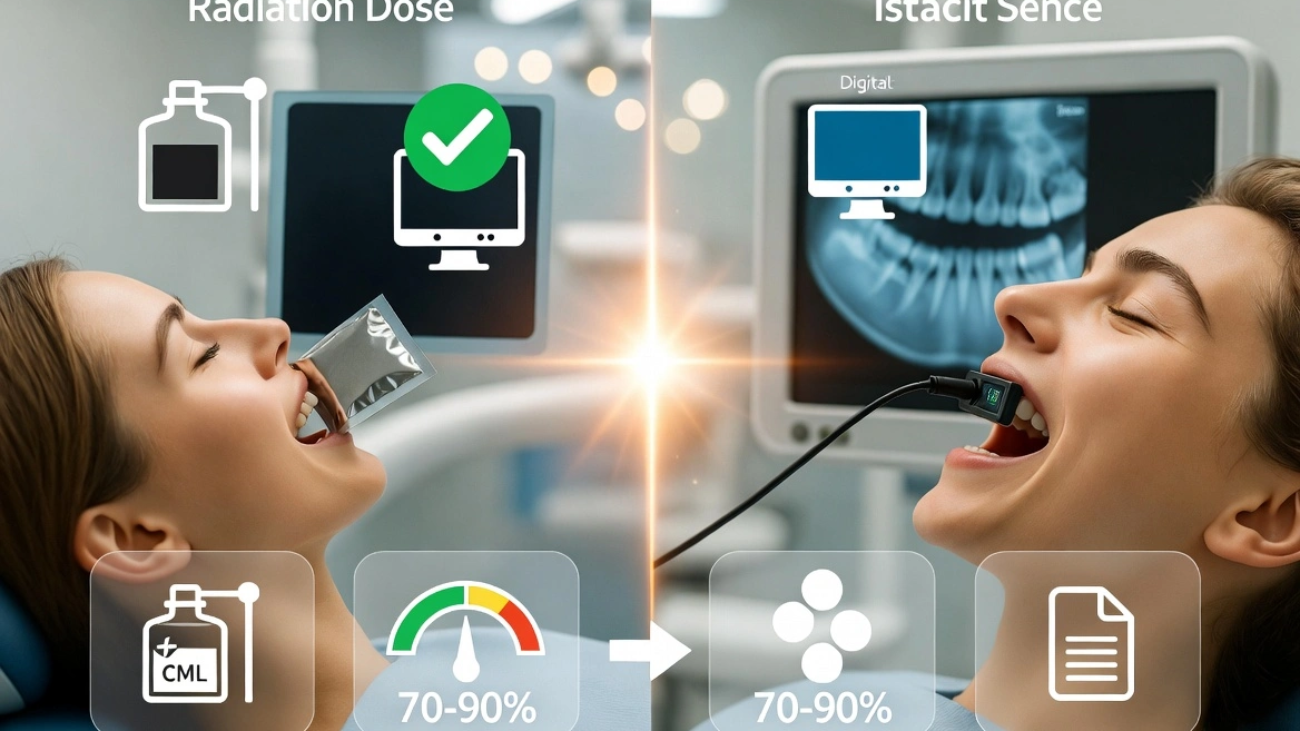
Today’s **modern digital CMOS sensors** use highly advanced active pixel technology. These solid-state silicon chips catch incoming photons and convert them into clear digital images with incredible efficiency. This technological leap allows modern practices to cut down patient radiation exposure by **70% to 90%** compared to old film methods, making an already low-risk procedure practically microscopic.

4. Triple-Layer Protection Protocols

In addition to utilizing fast digital sensors, dental teams use a multi-layered safety strategy to ensure patient exposure stays as close to zero as possible:

The ALARA Principle

Standing for **As Low As Reasonably Achievable**, this is the guiding rule for clinical radiography. It means a doctor will never take an image just because a calendar says so. Every single scan must have an explicit diagnostic reason based on a physical check of your teeth.

Leaded Aprons & Thyroid Collars

Even though modern X-ray beams are incredibly focused, protective aprons lined with lead or composite metals block any secondary scatter radiation. A built-in thyroid collar fits securely around the neck, completely shielding sensitive hormone glands from unnecessary exposure.

Precision Beam Collimation

Modern X-ray tubeheads use long, lead-lined cones called collimators. Instead of letting radiation spread out in a wide circle, a rectangular collimator narrows the beam down to the exact size and shape of the sensor, protecting the surrounding facial tissues perfectly.

5. Diagnosing vs. Guessing: The Hidden Hazard of Refusal

When considering **Are Dental X-Rays Safe?**, it’s crucial to look at the other side of the equation: the very real danger of refusing necessary diagnostic images. A standard visual look with a dental mirror can only see the outer surfaces of your enamel.

More than **50% of an adult’s tooth structure** hidden beneath the gum line remains completely invisible to the naked eye. Without digital imaging, serious issues can develop undetected, including:

  • Hidden decay tunneling between tight tooth contacts.
  • Asymptomatic infections brewing deep around root tips or bone structures.
  • Silent jawbone loss caused by progressive periodontal disease.
  • Cysts, abscesses, or impacted teeth threatening neighboring roots.

By the time these hidden anomalies cause physical pain, the damage is often extensive, requiring complex treatments like root canals or extractions. Catching these issues early with low-dose digital imaging is the safest way to preserve your long-term health.

🔬 Go Deeper Into the Technology: Want to see exactly how these low-dose systems turn minor photon signals into crisp images? Read our comprehensive technical guide explaining how dental x-ray sensors work to learn about internal scintillator screens and direct conversion engineering.

6. Frequently Asked Questions

Are dental X-rays safe for young children?

Yes, they are completely safe. Children’s developing mouth structures actually make them prime candidates for early monitoring. Modern digital systems feature customized pediatric sizing modes that reduce exposure to a tiny fraction of adult settings.

Can dental radiography increase my long-term medical risks?

The risk of developing complications from a modern digital dental scan is practically zero. You absorb far more radiation from everyday cosmic rays during a routine commercial flight than you ever will from a localized bitewing set.

Why does the assistant leave the room if dental X-rays are safe?

While a single X-ray dose is minor for a patient, dental assistants take dozens of scans every single day. Stepping behind a lead-shielded wall protects the clinical team from accumulating repetitive exposure over years of practice.

Upgrade to Ultra-Low Radiation Standards

Give your patients absolute peace of mind. Equip your practice with the industry’s safest high-efficiency digital CMOS sensors and portable, heavily shielded X-ray tech from SwatDental.

ARTICLE EXECUTIVE SUMMARY

This patient safety review breaks down the clinical reality of modern dental X-ray safety, demonstrating how contemporary digital sensor engineering reduces dose absorption levels to standard background minimums.

CLINICAL RADIATION DISCLAIMER

The dosage data and safety metrics presented here are for patient education and general informational reference only. They do not replace professional medical advice, direct clinic radiation audits, or individual doctor diagnoses.

© 2026 SwatDental. All rights reserved. | Global Radiographic Safety Standards | Practice Platform Terms


How Often Should Dental X-Rays Be Taken

How Often Should Dental X-Rays Be Taken? Clinical Guidelines Guide


How Often Should Dental X-Rays Be Taken? Clinical Guidelines Guide


CLINICAL RADIOLOGY POLICIES

How Often Should Dental X-Rays Be Taken?

A technical review outlining official diagnostic intervals, risk-based classification pathways, and how modern digital sensor systems alter clinical exposure schedules.

📅 Updated: June 2026
⏱️ 9-11 Min Read
✓ ADA & FDA Framework Compliant

⚡ Quick Diagnostic Interval Guide

When evaluating **How Often Should Dental X-Rays Be Taken?**, there is no generic, one-size-fits-all calendar baseline. According to official American Dental Association (ADA) and FDA guidelines, radiographic frequency must be personalized based on a patient’s **age, clinical history, and active risk for oral disease**. For healthy adult patients with zero active caries history and low risk levels, bitewing examinations are typically recommended every **24 to 36 months**. However, for patients classified as high-risk—such as individuals suffering from active decay, structural bone loss, dry mouth syndromes, or hidden secondary enamel lesions—intervals are compressed to every **6 to 18 months** to catch underlying pathology before extensive damage occurs.

1. The Core Rule: Custom Risk Assessment vs. Calendar Defaults

In the past, patients often assumed that sitting down for dental images was a mandatory, automated addition to every single six-month cleaning appointment. However, modern evidence-based dentistry shifts the focus entirely. When establishing **How Often Should Dental X-Rays Be Taken?**, clinical regulatory bodies state that every single exposure must be explicitly justified by an updated physical evaluation.

Doctors analyze a patient’s historical oral patterns, structural anatomy stability, systemic medical health histories, and lifestyle habits before choosing an exposure plan. This means a patient with a pristine track record of zero structural enamel wear will experience vastly different exposure paths compared to someone managing shifting localized parameters.

2. Frequency Recommendations by Age Groups

Age groups alter the internal calcification structures of teeth and the overall movement speeds of hidden oral conditions, directly impacting how often a clinician needs to review diagnostic images.

Pediatric & Adolescent Stages

Children feature dynamic primary and mixed tooth setups. Because their jaw structures are actively growing and thin primary enamel layer walls can allow decay to progress quickly into nerve chambers, high-risk pediatric cases require bitewing sweeps every **6 to 12 months**. For low-risk children, the interval expands to **12 to 24 months**.

Fully Developed Adults

Once dental arches mature fully, structurally stable adults with sound enamel walls can easily extend their intervals safely. Low-risk individuals require routine bitewing checks only every **24 to 36 months**. For adults facing active recurring decay or shifting underlying restorations, clinical safety parameters direct imaging cycles every **6 to 18 months**.

New Patient Initial baselines

When an unfamiliar patient registers at a practice without access to recent historical records, a baseline scan is required to map out root paths, evaluate hidden dense structures, and identify bone levels. This typically involves a comprehensive **Full-Mouth Series (FMX)** or a panoramic sweep accompanied by localized bitewing views.

3. Clinical Indicators That Compress X-Ray Timelines

Several clinical and systemic conditions immediately push a patient into the high-risk category, requiring shorter intervals when determining **How Often Should Dental X-Rays Be Taken?**:

Active Periodontal Pathology

When a patient shows signs of receding gum structures or deep periodontal pocketing depths, regular physical checks are insufficient. The clinical team must routinely track structural crestal bone level heights beneath the tissue line to halt advanced bone loss.

Extensive Restorative History

Clinics managing complex smile reconstructions, deep crowns, multi-surface fillings, or implant fixtures must monitor margins closely. Hidden secondary decay forming right beneath old filling margins is impossible to view with eyes alone.

Xerostomia (Dry Mouth Syndromes)

Saliva serves as the mouth’s natural defense mechanism, neutralizing acids and continuously washing away sugars. When medications or medical issues dry out these fluid paths, decay can accelerate rapidly, necessitating tighter imaging cycles.

Active Orthodontic Mechanics

Applying structural force layers to move teeth requires careful tracking. Clinicians utilize focused imaging sweeps to watch changing root alignment profiles, evaluate underlying bone density states, and protect root tips from resorption risks.

4. How Modern Digital Sensors Impact Frequency Selection

One of the biggest factors that makes regular imaging safer today is the widespread shift away from legacy analog film packets. The core issue with old-school setups wasn’t just the operational lag; it was the high radiation dosing required to activate the film grain layers.

Modern dental clinics use highly responsive solid-state sensors. These digital tools feature highly advanced silicon design matrices that catch and convert photons with incredible efficiency, allowing doctors to capture high-definition anatomical details while using **up to 90% less radiation** compared to vintage film paths.

Because direct digital imaging cuts patient exposure down to microscopic millisievert ranges, it drastically lowers the safety hurdle for necessary diagnostic tracking. If a clinic needs to map a complex recovery path or check structural stability across shorter cycles, they can do so safely without pushing patients past acceptable background radiation safety limits.

5. ADA & FDA Radiographic Selection Master Matrix

This formal guideline matrix maps out standard, evidence-based recommendations for **How Often Should Dental X-Rays Be Taken?** across common patient risk profiles:

Patient Category & Age Group Clinical Status Profile Recommended X-Ray Modality Optimal Clinical Dosing Interval
Child (Primary/Mixed Dentition) Active decay history or high risk indicators Posterior Bitewings Every 6 to 12 Months
Child (Primary/Mixed Dentition) Zero active decay history; low risk indicators Posterior Bitewings Every 12 to 24 Months
Adolescent (Transitioning Dentition) Active decay history or high risk indicators Posterior Bitewings Every 6 to 18 Months
Adolescent (Transitioning Dentition) Zero active decay history; low risk indicators Posterior Bitewings Every 18 to 36 Months
Adult (Fully Developed Dentition) Active decay history or high risk indicators Posterior Bitewings Every 6 to 18 Months
Adult (Fully Developed Dentition) Zero active decay history; low risk indicators Posterior Bitewings Every 24 to 36 Months
New Patient (All Age Categories) Baseline intake; historical data missing FMX (Full Mouth Series) or Panoramic + Bitewings Administered immediately during initial comprehensive exam

🔬 Deepen Your Technical Foundation: To understand the exact semiconductor physics that make these low-radiation intervals safe, explore our comprehensive breakdown detailing exactly how dental x-ray sensors work to learn about cesium iodide scintillators and high-bit pixel mapping.

6. Frequently Asked Questions

Should pregnant patients completely avoid routine dental X-rays?

No, elective routine checks can be deferred until after delivery, but necessary diagnostic images to treat active tooth infections or emergencies are completely safe during pregnancy. Modern digital sensors combined with proper leaded aprons and thyroid shields keep scatter radiation away from the abdomen entirely.

How often should a full-mouth panoramic or CBCT image be updated?

Panoramic images are typically updated every 3 to 5 years depending on wisdom teeth development or TMJ monitoring needs. 3D CBCT scans are never scheduled on an automated calendar; they are ordered only when complex surgical or implant needs arise.

What are the risks if I choose to decline all recommended dental X-rays?

Declining images leaves hidden interproximal decay, jawbone loss, deep cysts, and root infections completely invisible. By the time these issues cause physical pain, the structural damage is often severe, requiring root canals or extractions that could have been avoided.

Equip Your Clinic for High-Efficiency Diagnostics

Ensure your practice delivers ultra-low dose diagnostic safety. Discover the industry’s finest digital CMOS sensors, phosphor storage plate systems, and nimble handheld generators at SwatDental.

ARTICLE EXECUTIVE SUMMARY

This clinical guide breaks down the risk-based factors governing how often should dental x-rays be taken, highlighting why automated calendar intervals are being replaced by custom diagnostic plans designed around safety and patient history.

CLINICAL RADIATION DISCLAIMER

The diagnostic timelines and criteria compiled here are intended strictly for educational and general information reference. They do not substitute for custom patient assessments, direct dental diagnoses, or clinical device guidelines.

© 2026 SwatDental. All rights reserved. | Regional Healthcare Radiographic Guidelines | Practice Portal Security


Digital vs Traditional Dental X-Rays

Digital vs Traditional Dental X-Rays: The Complete Clinical Comparison


Digital vs Traditional Dental X-Rays: The Complete Clinical Comparison


CLINICAL RADIOLOGY REVIEW

Digital vs Traditional Dental X-Rays

A deep technical evaluation comparing solid-state digital sensors against legacy analog film envelopes across diagnostic resolution, patient dosing safety, and operatory costs.

📅 Published: June 2026
⏱️ 10-12 Min Read
✓ Technical Safety Compliant

⚡ Core Technology Paradigm Shift

The central difference when breaking down **Digital vs Traditional Dental X-Rays** lies in the **capture mechanism and processing time**. Traditional X-rays rely on slow, analog film packets that require chemical development in a darkroom using toxic fixing agents, imposing a 5-to-8 minute operational delay. Conversely, digital radiography leverages sensitive solid-state silicon sensors (**CMOS/CCD**) or reusable phosphor sheets (**PSP**) that immediately translate radiation into high-bit pixel maps on a monitor. This shift to digital reduces patient **radiation exposure by up to 70% to 90%**, eliminates hazardous chemical waste, and unlocks advanced software manipulation filters for vastly sharper diagnostic precision.

1. Radiation Dosing & Patient Safety Metrics

When patients evaluate the topic of **Digital vs Traditional Dental X-Rays**, radiation exposure is almost always their primary concern. Traditional film radiography uses silver halide grains suspended inside a plastic sheet. Because these physical film grains require a relatively massive volume of photon strikes to trigger a dark chemical reaction, the patient must be exposed to longer radiation bursts from the tubehead.

Modern digital sensors alter this safety dynamic entirely. High-tier solid-state **CMOS receptors** boast exceptionally high **Quantum Efficiency (QE)**. Because the silicon pixels are highly responsive to photon packets, they require significantly less radiation to output a perfectly saturated image. Transitioning to digital channels slashes patient exposure settings by **70% to 90%** depending on whether you are shifting from D-speed or faster F-speed film, aligning perfectly with the strict **ALARA (As Low As Reasonably Achievable)** clinical safety protocols.

2. Darkroom Chemicals vs. Immediate Screen Rendering

The day-to-day operatory workflow represents another massive point of divergence when comparing **Digital vs Traditional Dental X-Rays**. The difference in image rendering mechanics directly dictates how many patients your team can smoothly care for in a shift.

Traditional Film Processing Cycles

Taking an analog film X-ray requires a tedious sequence of manual mechanical steps:

  • Place the plastic film envelope in the patient’s mouth.
  • Expose the packet, then walk it down the hall to a light-locked darkroom or counter-top processor box.
  • Unwrap the packet carefully, feed the film sheet into developer fluid tanks, rinse it in water, slide it into fixing chemicals, and wait for a full drying cycle.

This entire process introduces a **5-to-8 minute delay**. If the assistant accidentally misaligned the tubehead angle slightly, the error isn’t discovered until the dried film is ready, forcing a frustrating re-shoot sequence that breaks your schedule flow.

Digital Immediate Acquisition Channels

Direct digital sensors compress this entire workflow into a matter of moments. The solid-state chip rests securely inside a hygienic protective sleeve and captures the image data instantly. Within **less than two seconds**, the completed scan flashes onto the treatment monitor right next to the patient’s chair.

The clinician remains comfortably at the bedside the entire time. If an exposure adjustment or angle modification is needed, it can be executed instantly, creating a vastly smoother experience for both the assistant and the patient.

3. Spatial Resolution & Software Image Enhancement

At first glance under perfect laboratory setups, traditional high-quality analog film can display strong spatial resolution marks. However, in the real-world daily practice of analyzing **Digital vs Traditional Dental X-Rays**, digital channels possess a decisive diagnostic advantage thanks to software manipulation.

When a traditional film is processed, the resulting image is static. If the exposure turns out slightly too dark or too light, you must rely on a standard desk lightbox and a magnifying glass to squint at the small 2-inch plastic sheet, searching for subtle anomalies.

Digital imaging software transforms this passive review into an active diagnostic tool. Once the digital pixel map lands on your monitor, you can immediately **zoom in, adjust contrast levels, and invert grayscale ranges**. Specialized filters can sharpen edge boundaries to spotlight initial interproximal decay networks, trace tricky bone loss lines, or inspect apical root paths with incredible precision.

4. Environmental Impact & Practice Economics

Looking past direct clinical variables reveals a stark contrast in the environmental footprints and backend business costs of **Digital vs Traditional Dental X-Rays**. Traditional systems generate a continuous stream of material waste and chemical overhead. Practices must constantly purchase film packets, lead backing sheets, and fresh gallons of developer and fixer fluids.

Disposing of these depleted chemicals is heavily regulated because they carry hazardous heavy metal ions. This requires specialized waste collection contracts that add ongoing financial overhead to your office ledger.

While switching to a digital workflow involves an initial hardware investment in solid-state sensors, it eliminates these recurring material costs entirely. Your practice completely wipes away darkroom chemical maintenance, plastic film packet garbage, and physical chart filing cabinets. Digital scans are saved straight to local servers or secure cloud platforms, making records instantly shareable with insurance companies or specialists via encrypted links.

5. Side-by-Side Performance Comparison Matrix

This comprehensive table summarizes the core differences between **Digital vs Traditional Dental X-Rays** to help guide your practice conversion plans:

Performance Metric Traditional Analog Film Systems Modern Digital Sensor Platforms
Patient Radiation Exposure **Higher:** Requires extended emission timing to activate film grain matrices. **Significantly Lower:** Slashed by **70% to 90%** due to high QE silicon logic.
Image Acquisition Speed **Delayed:** Requires **5 to 8 minutes** for complete chemical tank cycling. **Instantaneous:** Renders on operatory screens in **under 2 seconds**.
Diagnostic Viewing Options **Static:** Limited to viewing small physical sheets over a desk lightbox. **Dynamic:** Full-screen zoom, live contrast tweaks, and sharp edge filters.
Chemical & Waste Footprint **High:** Constant disposal of heavy lead sheets and toxic chemical fluid tanks. **Zero:** Entirely paperless and chemical-free electronic data path files.
Record Storage & Sharing **Physical:** Stored in manual chart jackets; requires physical mail for transfers. **Digital:** Instantly integrated into dental software; simple encrypted link sending.
Recurring Material Overhead **High:** Ongoing costs for film packets, developer fluids, and toxic waste disposal. **Minimal:** Bound entirely to initial sensor asset purchases and barrier sleeves.

🔗 Explore the Semiconductor Architecture: If you want to understand the exact internal layer stack configurations that enable this massive radiation reduction, read our detailed technical entry explaining how dental x-ray sensors work to master scintillator physics and chip layouts.

6. Frequently Asked Questions

Can I use my existing wall-mounted tubehead machine if I switch to digital sensors?

Yes, almost all traditional X-ray tubeheads work perfectly with digital sensors. You simply need to adjust the timer setting down to match the shorter exposure intervals required by digital silicon chips.

Is a digital dental sensor uncomfortable for patients compared to soft film?

Rigid solid-state digital sensors are thicker than traditional film packets. However, modern sensor brands counter this by designing smooth, heavily rounded corners and offering multiple sizes to match different patient anatomies cleanly.

How are digital dental X-ray files protected under modern data privacy rules?

Digital radiography files are stored directly inside your practice management software, which secures patient data through advanced local database encryption, user password paths, and encrypted cloud backup networks.

Ready to Transition to Modern Digital Diagnostics?

Stop spending money on recurring film packets and toxic chemical lines. Explore premium, high-efficiency digital imaging configurations at SwatDental to modernize your clinical workflow today.

ARTICLE EXECUTIVE SUMMARY

This comparative clinical reference evaluates the core differences between digital vs traditional dental x-rays, mapping out the clear advantages digital paths offer across patient dosing safety, processing efficiency, and eco-friendly operations.

CLINICAL DISCLAIMER

The technical data compiled here is intended purely for informational, reference, and educational purposes. This reference manual does not substitute for formal equipment calibration plans, expert medical diagnostics, or specialized health directives.

© 2026 SwatDental. All rights reserved. | International Clinical Radiology Standards | Corporate Site Policies


Types of Dental X-Ray Sensors Explained

Types of Dental X-Ray Sensors Explained: The Complete Clinical Guide


Types of Dental X-Ray Sensors Explained: The Complete Clinical Guide


CLINICAL RADIOGRAPHY REFERENCE

Types of Dental X-Ray Sensors Explained

An exhaustive structural analysis breaking down intraoral receptors, traditional radiation delivery machines, handheld portability variants, and advanced diagnostic 3D imaging infrastructure.

📅 Published: June 2026
⏱️ 12-15 Min Read
✓ Peer-Reviewed Engineering Data

⚡ Summary of Imaging Modalities

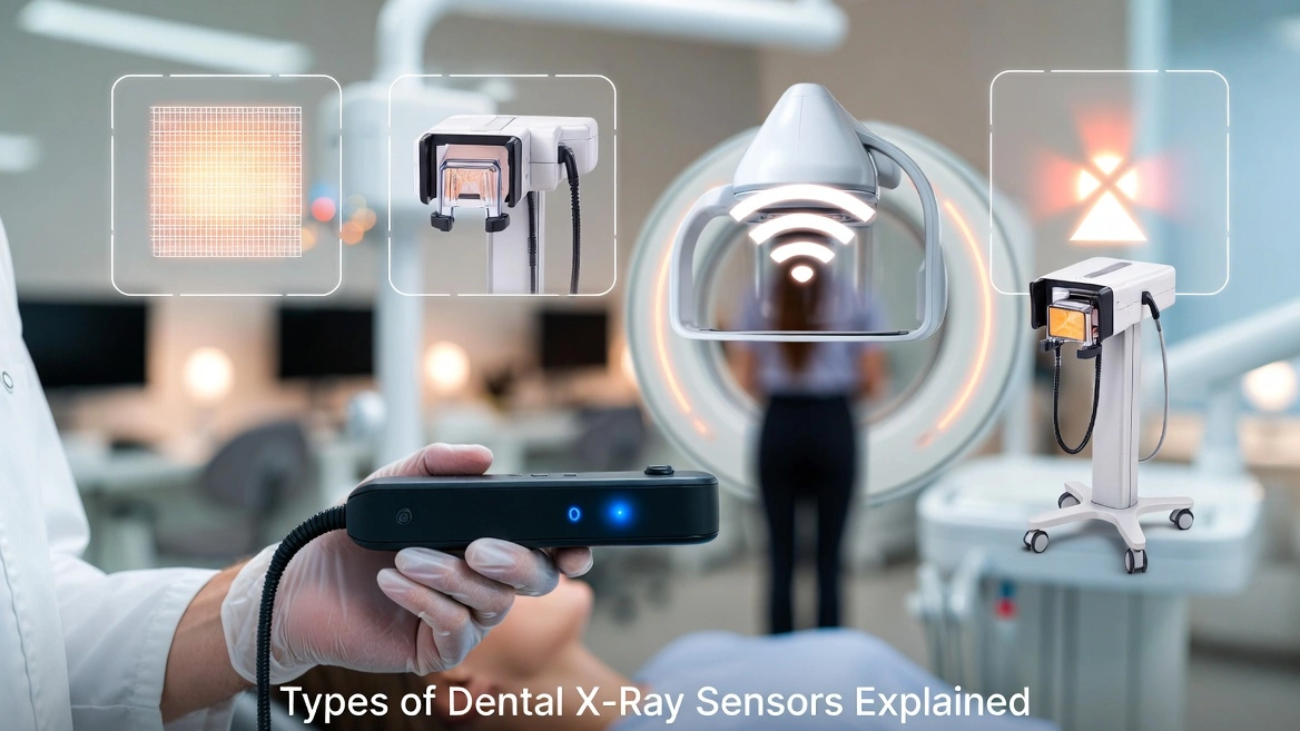
When evaluating the comprehensive landscape of **Types of Dental X-Ray Sensors Explained**, modern diagnostic systems are fundamentally split between **intraoral digital receptors** and **radiation delivery source units**. Intraoral imaging relies on rigid solid-state detectors (**CMOS/CCD**) for instant on-screen rendering or flexible **Phosphor Storage Plates (PSP)** for enhanced structural adaptation. These receptors collect radiation emitted from structural hardware arrays, which range from traditional **wall-mounted units** and **mobile floor-stand systems** to highly responsive **handheld cordless generators** and advanced **3D Extraoral CBCT infrastructure**. Choosing the correct modality directly determines diagnostic resolution, operatory mobility pathways, and overall clinical setup throughput.

1. Digital Intraoral Receptors: CMOS, CCD, and PSP

To truly unpack the subject of **Types of Dental X-Ray Sensors Explained**, we must first categorize the digital targets placed directly inside the patient’s oral cavity. These sensors act as the structural receptors that record localized radiation differences as high-energy beams pass through dense bone, enamel, and soft tissue structures.

CMOS (Complementary Metal-Oxide Semiconductor)

The contemporary gold standard for solid-state imaging arrays. **CMOS sensors** integrate active pixel logic, meaning every individual pixel well houses its own micro-transistor configuration to amplify and process incoming data streams on site. This allows for near-instant picture display on operator monitors in under two seconds.

CCD (Charge-Coupled Device)

The foundational heritage platform for early digital radiography systems. **CCD sensors** rely on a sequential transfer mechanism where electrical charges are systematically shifted down rows to a single corner readout node for processing. While delivering excellent uniformity, they are vulnerable to image blooming and higher operational latency.

PSP (Phosphor Storage Plates)

A highly flexible, wireless alternative that mimics traditional film mechanics. **PSP plates** use a photostimulable phosphor coating that records a temporary latent image. The plate is then transferred into an external laser scanner unit that reads and clears the data, trading away instantaneous speed to achieve unmatched patient positioning comfort.

2. Radiation Delivery Structural Mechanics: Wall-Mounted vs. Floor-Stand Mobile Systems

A receptor cannot generate diagnostic value without an optimized source engine. A central theme when examining the diverse **Types of Dental X-Ray Sensors Explained** involves assessing the mechanical delivery systems that support the high-voltage x-ray tubehead inside the operatory.

Traditional Wall-Mounted Tubehead Arrays

The classic structural foundation of modern dental practices. These systems feature an articulating arm anchored securely to wall structural studs. The primary benefit of a **wall-mounted x-ray unit** is its complete lack of a floor footprint, keeping operatory walking lanes clear and providing highly predictable drifting resistance during fine alignment adjustments.

However, these configurations restrict radiation capability to a single chair setup. If a practice layout requires multi-room expansion, significant structural costs are required to mount dedicated units inside every separate operational cove.

Mobile Floor-Stand Systems

Designed specifically for clinics that prioritize multi-chair layout adaptability. A **floor-stand x-ray configuration** features a weighted, heavy-duty wheeled caster base supporting the upright counter-balanced extension arm assembly. This setup allows operatory teams to roll a single high-voltage tubehead engine across different rooms smoothly.

The trade-off involves physical space management. The heavy caster base requires active room storage space and requires clinicians to meticulously handle heavy mechanical paths around baseplates, patient chairs, and floor cords.

3. Handheld Cordless Battery Units

One of the most radical developments within the spectrum of **Types of Dental X-Ray Sensors Explained** is the transition toward absolute cordless portability. Modern **handheld x-ray generators** pack high-capacity lithium-ion battery blocks and dense internal lead shielding directly into a camera-style form factor.

This setup allows the clinician to remain continuously at the patient’s bedside, holding the radiation unit completely free of physical mount bounds. By avoiding the need to step entirely outside the room to fire the exposure switch, patient movement artifacts are significantly reduced—an exceptional benefit when managing pediatric or highly anxious patients.

Radiation Safety Engineering Note: Handheld units protect the operator through a dual-layer strategy: heavy internal insulation to absorb secondary leakage, paired with an external clear lead-filled backscatter shield. This shield generates a precise cone of safety, reflecting deflected photon scatter pathways entirely away from the operator’s hands and torso.

4. Advanced Extraoral 3D Infrastructure: CBCT & Panoramic Systems

As diagnostic requirements grow more complex, intraoral views are combined with extraoral systems that capture comprehensive anatomical structures from outside the patient’s face. These systems represent the absolute peak of modern diagnostic hardware capabilities.

2D Panoramic Tomography Arrays

Provides a continuous, flattened broad view mapping the entire maxillo-mandibular arch, temporomandibular joints (TMJ), and maxillary sinus structures onto a single wide visual field. This is achieved by systematically rotating a linked tubehead and extraoral sensor band around the patient’s head in a synchronized path profile.

3D Cone Beam Computed Tomography (CBCT)

Replaces flat 2D approximations with ultra-precise **3D volumetric datasets**. By casting a cone-shaped radiation beam that acquires hundreds of separate thin-slice profiles in a single sweep, software engines reconstruct complete 3D models. This spatial clarity is mandatory for managing precise implant planning, complex endodontic root configurations, and orthodontic path assessments.

5. Cross-Platform Architectural Matrix

To simplify the procurement and deployment process, this master table synthesizes operational capabilities across all major **Types of Dental X-Ray Sensors Explained**:

Imaging System Type Primary Receptor Format Data Output Velocity Core Advantage Primary Operational Limit
CMOS Solid-State Rigid Silicon Active-Pixel Well Matrix Instantaneous (1.5 to 2 Seconds) Hyper-fast workflow and excellent theoretical resolution marks Thick, unyielding casing profile can cause placement discomfort
PSP (Phosphor Plate) Flexible Photostimulable Crystal Sheet Delayed (Requires external laser scan cycle) Thin profile matches traditional film shapes and comfort rules Plates collect physical scratches and require manual handling
Wall-Mounted Unit External Source (Feeds Intraoral Receptors) Determined by attached sensor format Zero floor footprint with highly stable drifting resistance Locked permanently to a single designated operator chair space
Mobile Floor-Stand External Source (Feeds Intraoral Receptors) Determined by attached sensor format Enables single tubehead engine sharing across multiple coves Bulky baseplate footprint requires active room navigation care
Handheld Cordless External Battery Source Array Determined by attached sensor format Allows clinician to hold position smoothly at the patient’s side Requires strict compliance with backscatter shield geometry
3D CBCT Infrastructure Extraoral Rotating Sensor Panel Base Processing delay for full 3D rendering Provides complete 3D volumetric views of anatomical structures Requires substantial capital layout and specialized facility footprint

💡 Deepen Your Technical Foundation: Now that you have explored the wide variety of delivery systems and imaging configurations, you can easily examine the deep atomic conversions that convert radiation into clear pixels. Review our companion guide detailing exactly how dental x-ray sensors work to master the underlying physics behind solid-state conversion layers.

6. Frequently Asked Questions

Is a completely wireless intraoral CMOS sensor path options stable?

Yes, modern wireless CMOS systems use secure radio frequency (RF) or direct Wi-Fi local links to move data packets fast. They are completely stable but rely on on-board battery modules, which slightly increases the thickness of the sensor’s perimeter casing.

Why do panoramic and CBCT machines require patients to stand completely still?

Because extraoral systems use an extended data acquisition arc path that takes several seconds to spin around the face, any minor movement can cause ghosting lines or blur artifacts that ruin the entire scan.

Do handheld radiography options pose high health safety risks for operatory teams?

No, as long as the operator holds the device perpendicular to the patient, keeping themselves securely inside the protection path mapped by the external clear lead-filled shield circle.

Optimize Your Practice Radiography Workflow

Whether you need to deploy thin, patient-friendly phosphor plate workflows, robust solid-state CMOS arrays, or nimble handheld emission tech, our specialists can help configure the ideal diagnostic layout.

ARTICLE EXECUTIVE SUMMARY

This clinical radiography reference manual outlines the technical distinctions governing various types of dental x-ray sensors, supporting mount mechanics, and extraoral imaging frameworks. Understanding these details helps practices elevate diagnostic accuracy while protecting patient comfort and safety protocols.

MEDICAL RESPONSIBILITY DISCLAIMER

The technical descriptions compiled here are intended strictly for educational, reference, and informational use. This material does not substitute for formal technical equipment diagnostics, expert regulatory guidance, or medical operatory protocols.

© 2026 SwatDental. All rights reserved. | Regional Radiography Device Standards | System Privacy Policies


How Dental X-Ray Sensors Work

How Dental X-Ray Sensors Work: Technical Engineering Guide


How Dental X-Ray Sensors Work: Technical Engineering Guide


ADVANCED CLINICAL PHYSICS

How Dental X-Ray Sensors Work

An exhaustive engineering analysis detailing architectural layer configurations, conversion formulas, and deep data pathways that dictate exactly how dental x-ray sensors work.

📅 Updated: June 2026
⏱️ 15-18 min read
✓ Technical Standards Compliant

⚡ Core Engineering Executive Summary

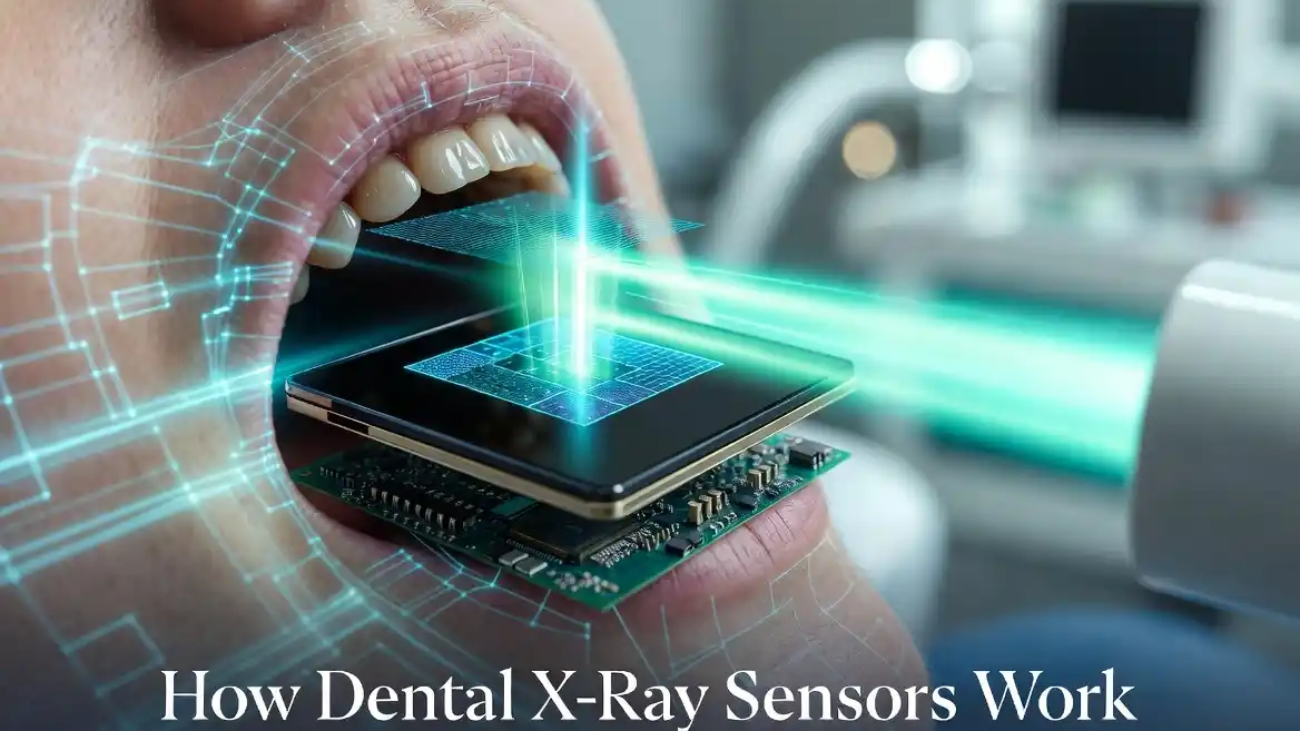
Understanding how dental x-ray sensors work requires isolating a sequence of three technical changes. Before diving into pixel arrays, it is best to review the core architecture in our guide: What Is a Dental X-Ray Sensor? High-voltage tungsten emission penetrates dental tissue and strikes an active Cesium Iodide (CsI) scintillator substrate, which instantly maps incoming shortwave ionizing energy into uniform visible light bands. Next, these light packets are guided by an integrated fiber-optic plate onto a solid-state CMOS or CCD semiconductor wafer, inducing a localized photoelectric current that traps electron concentrations proportional to tissue density. Finally, an on-chip Analog-to-Digital Converter (ADC) maps these variations into binary signals, outputting an ultra-sharp, high-resolution diagnostic image to imaging software suites via high-speed USB paths in milliseconds.

Table of Contents


1. Solid-State Physics and Quantum Dynamics

To systematically analyze how dental x-ray sensors work, one must evaluate the mathematical and quantum interactions occurring when ionizing electromagnetic radiation meets dense atomic elements. Unlike classical analog film systems that rely on slow chemical silver-halide suspension reactions, modern intraoral sensors operate entirely on photoelectric conversion mechanics. The process involves tracking high-energy photons emitted by an x-ray tubehead—typically operating within a calibrated parameters spectrum of 60 kVp to 70 kVp and an anodic current of 4 mA to 7 mA.

As these highly energized photons penetrate the oral cavity, they undergo attenuation variations determined directly by the material’s atomic number and localized density. Highly mineralized tooth structures (hydroxyapatite enamel matrices) absorb the massive majority of the x-ray photons through complete photoelectric absorption. Conversely, less dense pathways—such as active pulp chambers, initial interproximal decay networks, and periodontal ligament gaps—allow the photons to pass through with minimal speed losses. The spatial density map produced by this pattern strikes the active face of the sensor, establishing the foundational parameters for high-definition digital processing.

2. Deep Micro-Layer Structural Anatomy

Evaluating how dental x-ray sensors work requires looking past the protective outer casing. The external body is typically composed of impact-resistant polycarbonates or thermoplastic polyurethanes designed to withstand saliva exposure, chemical disinfectants, and patient biting pressures. Inside this protective outer box sits an intricately layered diagnostic sandwich:

1. Scintillator Screen Matrix

The frontline diagnostic component, commonly crafted using micro-crystalline Cesium Iodide (CsI) doped with Thallium, or Gadolinium Oxysulfide. Because standard silicon substrates possess very low absorption properties for raw x-ray wavelengths, the scintillator acts as a crucial first-step converter. Its needle-like micro-structures act as highly efficient fiber-optic pipes, capturing incoming x-ray photons and immediately converting them into concentrated bursts of visible light spectrum waves (typically around 550nm).

2. Coherent Fiber-Optic Plate (FOP)

A dense, multi-million fiber element positioned directly beneath the scintillator screen. This layer fulfills two critical purposes: it guides the converted visible light paths directly down to the silicon surface without allowing side-to-side scatter (preserving edge resolution and clarity), while actively blocking unabsorbed x-ray photons from reaching and degrading the sensitive underlying logic chips.

3. Solid-State Imaging Semiconductor

The structural core of the digital asset, leveraging either highly customized Complementary Metal-Oxide Semiconductor (CMOS) arrays or heritage Charge-Coupled Device (CCD) structures. This thin silicon wafer contains millions of independent pixel wells that compile and hold localized electrical charges proportional to the light intensity striking them.

4. Shock-Absorbing Core & Electronic Shielding Substrate

At the base of the structural sandwich sits a heavy-metal lead back-shielding plate. This layer prevents backscattered radiation from creating image noise, while an embedded anti-shock damping pad isolates the brittle silicon wafer from sudden drops or strong biting forces.

3. Microsecond Processing & Readout Sequence

The transition from an explosive burst of sub-atomic particles to an accurate digital diagnosis on an operatory monitor follows a strictly timed engineering process. This operational sequence dictates exactly how dental x-ray sensors work across every single exposure run:

Phase 1: Controlled Incident X-Ray Luminescence

The tubehead releases a targeted stream of x-ray photons. As they pass through tissue and reach the faceplate, the internal scintillator layer absorbs this invisible energy, instantly transforming it into green or blue visible light bands directed downward toward the semiconductor matrix.

Phase 2: Photoelectric Current Generation within Pixel Nodes

The newly transformed light photons pass through the fiber optic plate and hit the silicon semiconductor. This interaction triggers an internal photoelectric phenomenon: photons knock electrons free within the silicon matrix, creating electron-hole pairs that collect inside the capacitive pixel wells. The number of trapped electrons forms an analog charge map that directly reflects the patient’s anatomical variations.

Phase 3: High-Bit Analog-to-Digital Interfacing

An integrated Analog-to-Digital Converter (ADC) sweeps across the pixel matrix. In CMOS setups, miniature transistors at every individual pixel well amplify and convert the analog voltage value into clean binary data paths instantly. This digital conversion assigns specific numerical color codes across a 256 to 4,096 grayscale hierarchy, depending on the sensor’s bit depth.

Phase 4: High-Speed USB Communication and Software Filtering

The raw digital packets travel up a heavily shielded high-speed USB cable (or via wireless Bluetooth/Wi-Fi modules) directly to the server terminal. Companion software suites apply real-time filtering matrices to balance contrast and noise, displaying a crystal-clear diagnostic image on the monitor in under three seconds.

4. SwatDental Engineering & Learning Library

To expand your baseline master configuration beyond analyzing how sensors record localized energy maps, explore our specialized engineering background logs. Building a complete procedural understanding helps operatory teams resolve image anomalies and hardware faults instantly:

5. Advanced Spatial Resolution & Specification Profiles

When evaluating sensor hardware for an operatory setup, clinical teams must analyze several interconnected performance criteria. These engineering specifications determine the absolute limits of your diagnostic capabilities:

Theoretical vs. Visible Resolution

Measured in line pairs per millimeter (lp/mm). Premium sensors offer a theoretical limit of >25 lp/mm, with a visible resolution limit of 14 to 20 lp/mm. This high density allows clinicians to accurately trace micro-fractures, secondary decay lines, and structural shifts along implant boundaries.

Pixel Pitch Dimensions

Refers to the actual physical size of individual pixel wells on the silicon chip. High-tier diagnostic sensors keep this spacing between 18.5 to 22 micrometers. Tighter pixel pitches yield significantly higher spatial data resolution thresholds, which is essential for detecting early bone loss patterns.

Quantum Efficiency (QE) Metrics

Measures how effectively a system turns incoming radiation energy directly into valid pixels. Solid-state sensors achieve excellent efficiency marks of 40% to 70%, allowing clinics to slash patient radiation exposure numbers by up to 80% compared to legacy film options.

Modulation Transfer Function (MTF)

Quantifies the sensor’s capability to transfer contrast from a physical object over to the final digital screen file at varying spatial frequencies. High MTF ratings prevent fine structures from becoming blurry or washed out.

Grayscale Depth Layering

Leverages high-bit processing channels (12-bit up to 16-bit configurations) to capture thousands of unique gray values, highlighting tiny changes in bone density.

Signal-to-Noise Ratio (SNR) Optimization

High-end hardware optimizes SNR by keeping background noise thresholds safely below 200 electrons. This reduction eliminates graininess, delivering clean, artifact-free visual files across standard operational cycles.

6. Silicon Readout Systems: CMOS vs. CCD

While both semiconductor platforms capture incoming light rays successfully, the architectural mechanics defining exactly how dental x-ray sensors work vary heavily between CMOS and CCD architectures. Understanding these readout differences is critical for procurement planning:

Engineering Feature CMOS Sensors (Complementary Metal-Oxide) CCD Sensors (Charge-Coupled Device)
Signal Amplification Architecture Individual transistors located inside every single pixel node amplify signal tracks independently. Charges shift across pixel rows sequentially to a single dedicated readout node for amplification.
Data Generation Velocity Ultra-fast parallel data streams deliver image views on monitors in under 1.5 to 2 seconds. Slower sequential data processing can introduce a minor display lag (3 to 5 seconds).
Power Metrics & Mobility Extremely low energy requirements, allowing for sleek, true wireless connectivity systems. Higher power draw requirements, generally necessitating a continuous, physical wired USB link.
Structural Profile Limits Thinner base footprint, significantly improving patient comfort parameters. Thicker, rigid casing profiles due to specialized sequential tracing designs.
Manufacturing Yield & Economics Produced on standard silicon assembly lines, reducing replacement costs for clinics. Requires dedicated fabrication facilities, resulting in a premium capital expenditure.

7. Clinical Specialization & Diagnostic Integration

Analyzing how dental x-ray sensors work highlights huge practical advantages for daily clinical workflows. Moving past slow physical development processes unlocks several operational benefits:

🔬 Precision Endodontics

Essential for tracking working root length. Instant display settings let operators monitor files in real-time during apex configuration tasks, trace calcified root blockages, and confirm final canal seal completeness.

🦷 Operative Dentistry

Provides crisp, detailed bone tracking views to assess micro-leakage risks under complex crown assemblies, check cavity margins before placing materials, and verify deep structural soundness.

🦴 Periodontal Monitoring

Delivers ultra-precise mapping data to track horizontal or vertical alveolar bone loss patterns, monitor tricky furcation involves, and evaluate bone regeneration progress after osseous surgery.

👶 Pediatric Adaptability

Significantly lowers radiation exposure levels for younger, developing tissues. Rounded size-0 dental x-ray sensor shapes fit safely inside smaller mouths, while instant image rendering eliminates patient movement artifacts.

For official global technical compliance metrics and sensor testing protocols, review the
FDA Radiation-Emitting Products Directives
and explore the diagnostic safety recommendations detailed by the
American Dental Association (ADA) Science Center.

8. Frequently Asked Questions

Why can’t raw silicon chips process x-rays directly without a scintillator?

Raw silicon substrates are largely transparent to high-frequency, short-wavelength x-ray photons, meaning most radiation passes through without leaving an electrical charge. An internal scintillator layer acts as a crucial middle step, capturing raw x-rays and transforming them into visible light, which the silicon pixel wells can then easily detect and process.

Does the internal light conversion step blur the final diagnostic picture?

No, because modern systems feature an integrated fiber-optic plate behind the scintillator. This micro-structural layer uses thousands of parallel glass fibers to guide light beams directly down to the pixel wells without any side-to-side scatter, keeping the final image crisp and clear.

What causes digital x-ray images to degrade over long periods of use?

Image degradation is usually tied to physical cord strain or cumulative radiation damage, known as ionizing browning. Using protective positioners and handling cables carefully ensures your solid-state sensors deliver consistent, high-resolution diagnostic performance for years.

Final Technical Summary

Understanding how dental x-ray sensors work underscores the incredible blend of physics and engineering supporting modern dentistry. Transitioning from chemical developer tanks to high-efficiency solid-state CMOS and CCD sensors drastically lowers patient exposure risks while delivering instant, ultra-high-resolution diagnostic files. By utilizing scintillators, fiber optics, and advanced analog-to-digital converters, modern intraoral sensors capture hidden path patterns in seconds, streamlining clinical workflows and elevating long-term practice performance.

Add a Comment

Logged in as wad_ant


Ready to upgrade your clinical workflow? Explore premium imaging setups and diagnostic sensor configurations at
SwatDental.


© 2026 SwatDental. All rights reserved. | Corporate Privacy Policies | Pakistan Medical Equipment Log