 Cart is empty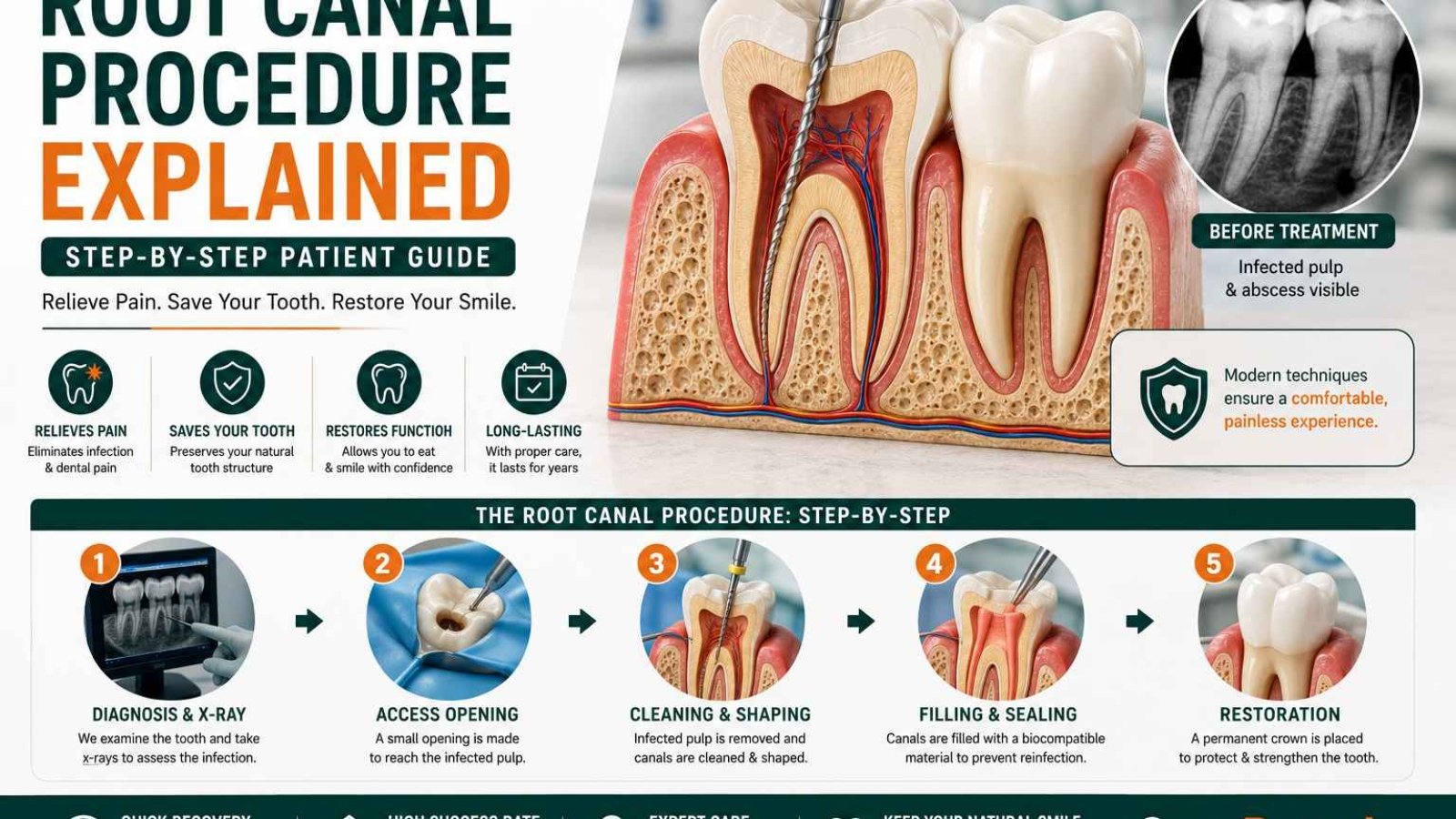
Root Canal Procedure Explained
Demystifying root canal therapy. Learn exactly what happens inside the treatment room, how modern technology ensures a painless experience, and how the procedure saves your natural smile.
⏱️ 12-14 Min Read
✓ Verified by Endodontic Specialists
What is a Root Canal & Why is it Done?
A root canal (known clinically as **endodontic therapy**) is a standard dental procedure used to save a tooth that has become severely decayed, cracked, or infected. Inside the hard outer layers of your tooth (the enamel and dentin) sits a soft tissue reservoir called the **pulp**, which contains sensitive nerves, blood vessels, and connective tissue. When bacteria breach this inner chamber due to a deep cavity or structural injury, the pulp becomes inflamed and infected. If left untreated, this infection can form a painful abscess, destroy the surrounding jawbone, and force an eventual tooth extraction. A root canal procedure removes the damaged pulp, cleans and sanitizes the inner chambers, and seals the space to preserve your natural bite.
1. Signs & Symptoms That a Root Canal is Needed
How do you know if an infection has made its way into the pulp of your tooth? While some cases display zero warning signs, most internal tissue infections present clear clinical symptoms that indicate immediate care is required:
Persistent, Throbbing Pain
A continuous, deep ache that echoes throughout your jaw, face, or neighboring teeth is a primary sign. This pain often increases when lying down or when biting down directly on the affected tooth.
Extreme Thermal Sensitivity
A sharp pain or lingering ache when drinking hot coffee or cold water. If the sensitivity continues for minutes after removing the hot or cold source, the internal nerve tissue is likely damaged.
Gum Swelling & Abscesses
Tender, inflamed, or darkened gums around the localized area. A small pimple-like bump (known as a fistula or abscess) may develop on the gum, occasionally discharging a fluid that leaves a bad taste in your mouth.
2. The Root Canal Procedure: Step-by-Step Breakdown
A root canal procedure is standard, predictable, and typically completed in one or two short visits. Understanding the individual stages can help ease any anxiety you might feel before your appointment:
- Step 1: Clinical Imaging & Setup: Your dentist takes detailed digital x-rays to map out the shape of the root canals and check for infection in the surrounding jawbone. Next, a numbing gel is applied to the gums, followed by local anesthesia to fully numb the tooth. A small sheet of protective rubber (a dental dam) is placed around the tooth to keep it dry and completely free of saliva during treatment.
- Step 2: Accessing the Infected Chamber: Using a precision high-speed handpiece, the dentist makes a tiny opening in the top biting surface of a molar, or behind a front tooth. This provides clean access into the damaged pulp chamber.
- Step 3: Removing the Pulp & Cleaning the Canals: The endodontist uses a sequence of tiny, flexible instruments called endodontic files. These files sweep away the dead pulp tissue and gently shape the internal root paths. The empty spaces are continuously flushed out with antimicrobial solutions (like sodium hypochlorite) to kill any remaining bacteria.
- Step 4: Sealing & Filling the Tooth: Once the canals are fully sanitized and dried, they are filled with a rubber-like material called gutta-percha, mixed with an adhesive sealer to completely close off the canals. A temporary filling is placed over the access hole to protect the tooth until your permanent crown is ready.
- Step 5: Final Restoration (The Crown): Because a tooth without a living root becomes more brittle over time, you will return in a week or two to have a permanent custom porcelain crown fitted. This fully restores the tooth’s structural strength, allowing you to chew normally.
3. Pain Management & Anesthesia Realities
Is a Root Canal Painful?
The most common myth about root canals is that they are intensely painful. In reality, modern local anesthetics ensure that the procedure feels no different than getting a standard cavity filling.
The actual procedure does not cause pain—it actively removes the inflamed, throbbing nerve tissues that caused your toothache in the first place, providing immediate relief.
What to Expect Post-Treatment
After the local anesthesia wears off, you may experience mild, dull sensitivity or tenderness in the surrounding gums for 2 to 4 days. This is a normal healing response as the deep bone tissues settle.
This temporary discomfort can be easily managed with standard over-the-counter anti-inflammatory medications like Ibuprofen or Paracetamol.
4. Essential Materials Used in Endodontics
Endodontic therapy relies on specialized materials to ensure the empty canals stay completely sealed and free of bacteria for years to come:
| Endodontic Material | Clinical Purpose | Biological Advantage Provided |
|---|---|---|
| Gutta-Percha Points | A natural, rubber-like thermoplastic material inserted to fill empty canals. | Biocompatible and flexible; easily fills complex root shapes without irritating the body. |
| Bioceramic Root Sealers | A medical cement used to secure gutta-percha points inside the canals. | Creates a tight, waterproof seal that actively prevents new bacteria from entering. |
| Sodium Hypochlorite | An antimicrobial liquid used to flush and wash out root systems. | Dissolves organic debris and sanitizes tiny side branches that tools cannot reach. |
| Composite Resin | A tooth-colored temporary material used to fill the crown access hole. | Protects the inner filling material from food particles until a permanent crown is placed. |
🔍 Clinical Insight: Accurate diagnosis is essential before any endodontic procedure. Explore our detailed guide comparing modern digital imaging options like how dental x-ray sensors work to see how dentists check for underlying bone abscesses safely.
5. Post-Treatment Recovery & Aftercare Protocols
Protecting your treated tooth while it waits for a permanent crown ensures a smooth recovery and guards against structural damage:
- Avoid Hard Chewing: Do not chew hard foods on the treated side of your mouth until your permanent crown is cemented. The temporary filling material is soft and can wear down or crack under heavy pressure.
- Maintain Routine Hygiene: Continue brushing and flossing all your teeth normally. Be extra gentle around the treated tooth when sliding dental floss out from between the teeth so you don’t catch and pull out the temporary filling.
- Watch for Abnormal Signs: While mild soreness is expected for a few days, contact your dentist if you notice visible swelling in your face or cheek, or experience a return of severe, throbbing pain.
6. Frequently Asked Questions (FAQ)
How many appointments are required to complete a root canal?
Most standard root canals can be completed in a single visit lasting 45 to 90 minutes. If the tooth has a severe, long-term infection, your dentist may place a localized medication inside the canal and wait a week before sealing it at a second appointment.
Is it better to get a root canal or extract the tooth instead?
Saving your natural tooth is always the preferred choice. Keeping your original tooth preserves your natural biting strength and prevents neighboring teeth from shifting out of alignment. Extractions often require more complex, expensive replacements like dental implants or bridges later on.
Can a tooth that has had a root canal get a cavity in the future?
Yes. While the interior of the tooth is sealed and can no longer feel pain, the outer enamel margins around the base of your new crown can still develop decay if plaque is allowed to build up. Routine brushing and professional cleanings remain essential.
Equip Your Practice with Premium Endodontic Supplies
Performing comfortable, predictable root canal treatments requires precision equipment. From premium rotary files and reliable bioceramic sealers to advanced diagnostic systems, SwatDental offers the high-performance materials your practice needs to deliver exceptional care.
Add a Comment